
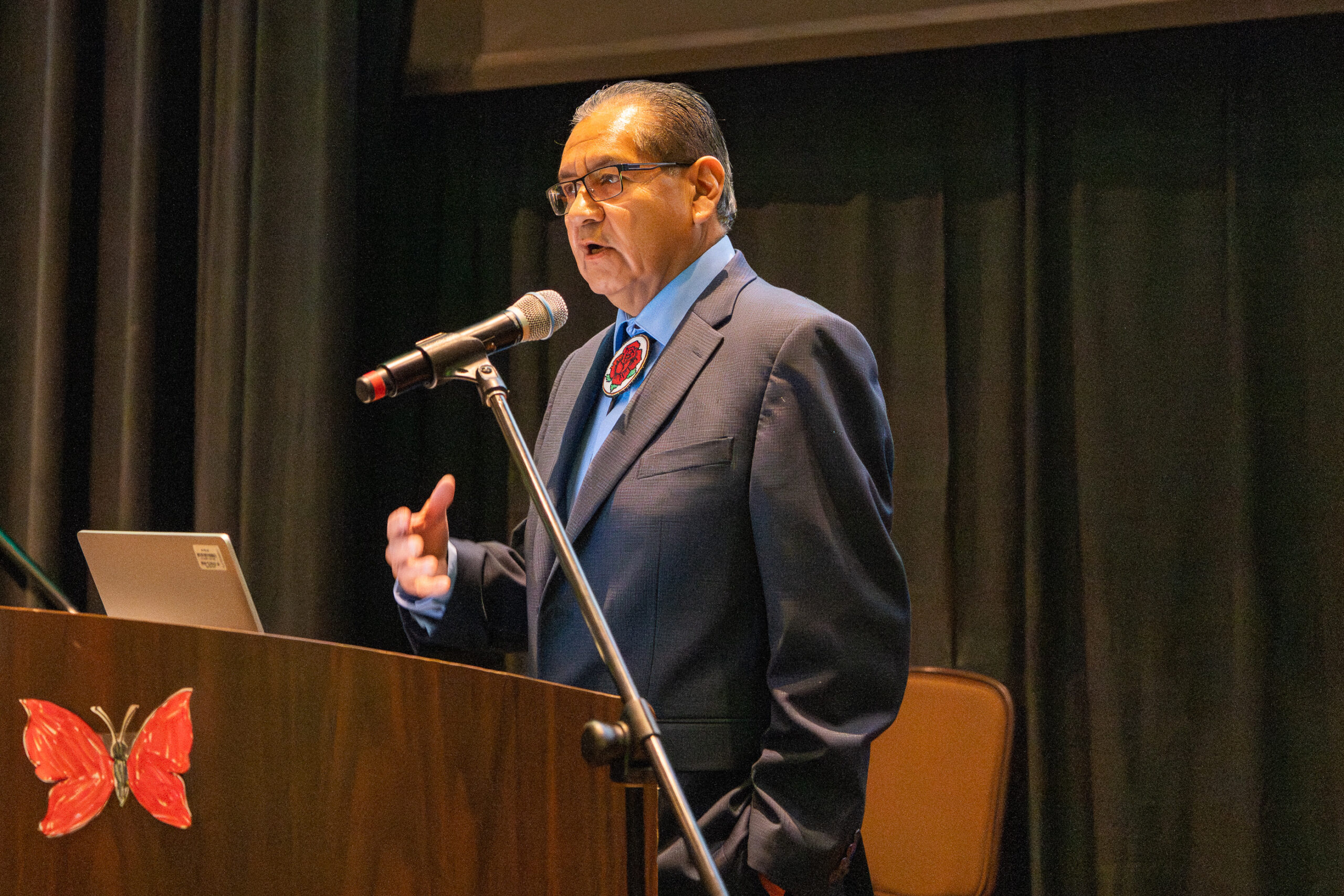
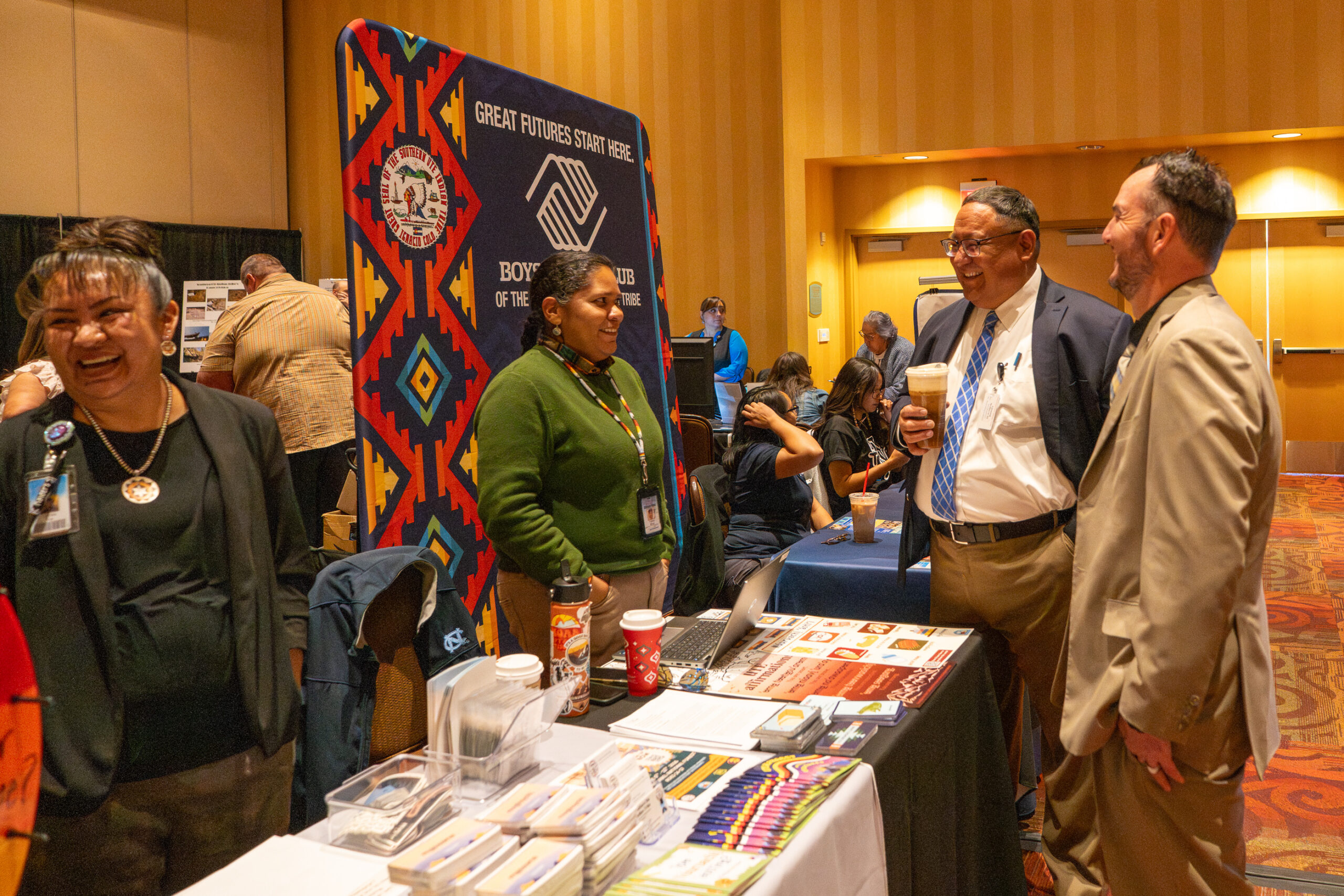
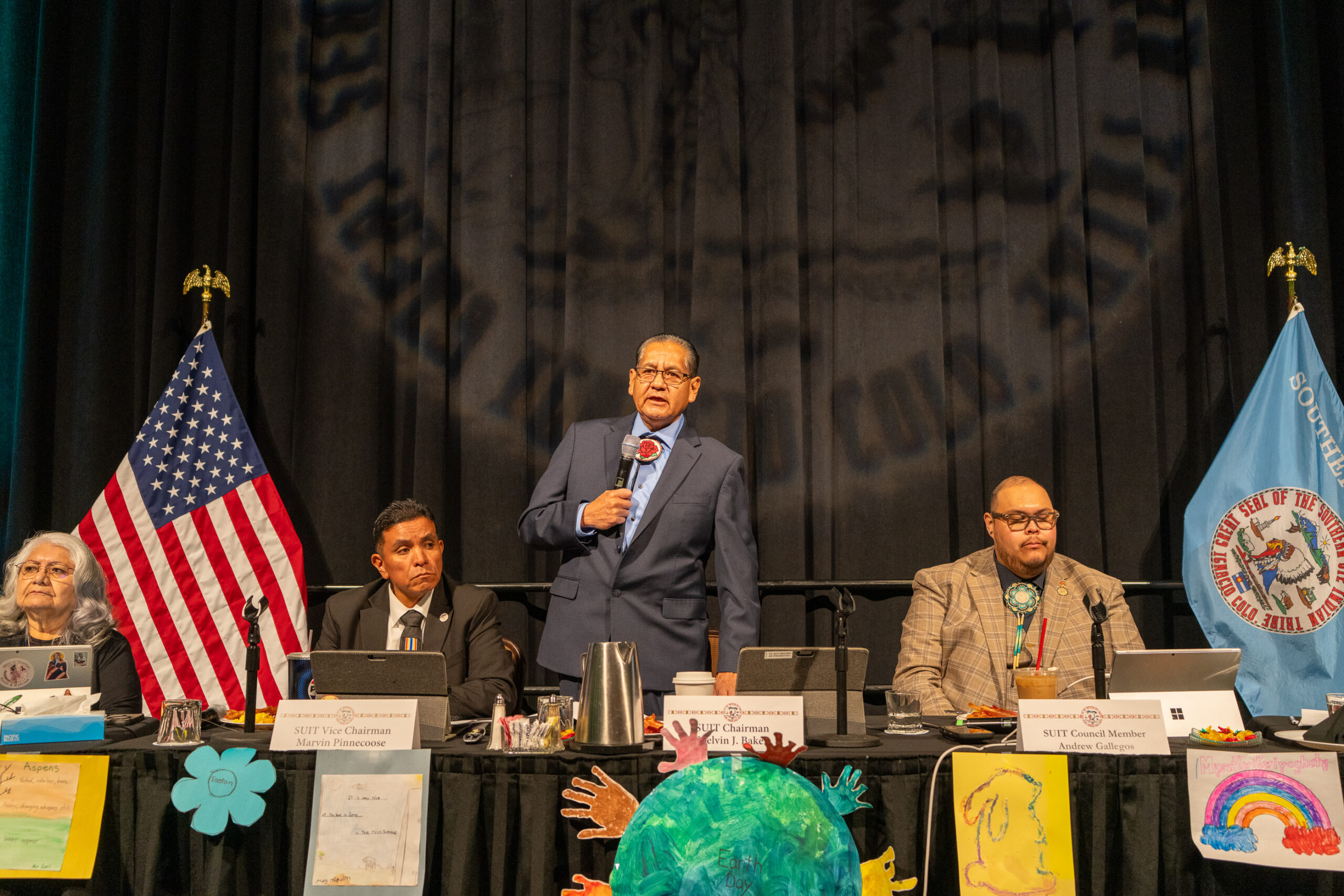
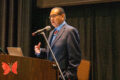


Southern Ute Chairman, Melvin J. Baker hosted the Southern Ute General Meeting at the Sky Ute Casino Resort, Thursday, April 23. Following a light breakfast, the meeting began with an invocation provided by Southern Ute tribal elder, Georgia McKinley and a welcome from Chairman Baker to those in attendance in person and online. Each Tribal Council member provided general updates on their respective committees they serve on formally as ex-officios.
Mr. Leonard Redhorse, Justice & Regulatory Director, provided an update on current staffing within the department. The Tribal Access Program (TAPs) and Criminal Justice Information System (CJIS) were presented to explain criminal data storage and the tribe’s direct access to such. The Sex Offender Registration & Notification Act (SORNA) was explained and reviewed with a demonstration to website access information provided to the tribal membership. Redhorse also provided an update on the Southern Ute Police Department (SUPD) and Tribal Ranger deployment as a collaborative effort of policing the reservation with a focus on natural resource enforcement in wildlife hunting, and fishing. Redhorse reviewed the staffing within the department reporting Tribal Rangers and TERO are fully staffed at this time. The Division of Gaming (DOG) has hired a Southern Ute tribal member in their Investigator Trainee position, leaving the division with one vacant Gaming Investigator position. Southern Ute Detention is also staffed up with the Division Head and a Transport Drive remaining vacant. SUPD is almost fully staffed with three vacant positions being a Patrol Officer, a CJIS Specialist, and one Dispatcher position.
Southern Ute Shared Services (SUSS) introduced the new CIO, Mr. Imad Sweidan, along with his leadership team that manages Applications Development, Business Operations, Broadband and Digital Equity, and IT Security. Sweidan gave an overview of the services SUSS currently provides to the Southern Ute tribal entities and the tribal membership. Southern Ute Tribal Member Services include the Southern Ute Digital Equity Program (SUDEP) and the Broadband Infrastructure Deployment Program.
Tribal Health Director, Lizette Langefels and Southern Ute Health Center Physician, William Finn, provided an overview of the Southern Ute Recovery Housing project. An explanation of recovery housing was provided. The Department is proposing two homes for men and women with 24/7 on-site staffing, transportation, medical care, and vocational rehabilitation. This project would be funded by various grants with Medicaid and other third-party billing revenue to cover ongoing operations. This project would alleviate the Tribe paying for members to receive these services elsewhere. The site is being proposed near the Mesa Building where the Southern Ute Behavioral Health Division currently operates and provides services. This project is slated for Summer 2027 construction and a Fall 2027 opening.
Southern Ute Education Acting Director, Mr. Michael Kirsch, provided an update on SUIMA and the Education Department. The department currently carries out services with 50 staff members. SUIMA currently has 80 students who are enrolled Southern Ute members or first descendants of a Southern Ute tribal member. Education currently offers after school tutoring to 129 students with in-school academic support as well as summer programming. There are currently 50 Southern Ute tribal members enrolled in the scholarship program with 12 Spring graduates and three Fall graduates. Southern Ute Education is focusing on the following Core Strategic priorities: Student Engagement, Community Partnerships, and High Functioning Team and Systems. Education is prioritizing Safety and Emergency Preparedness with the local school districts, community, Behavioral Health providers, and local law enforcement. Education also provided an overview of educational programming taking place through the summer months.
Southern Ute Tribal Credit presented modifications to the program along with an introduction of the division staff and current Tribal Credit Committee members. Mr. Zeb Voganthaler, Tribal Credit Division Head, reviewed the Line of Credit Program and usage data. The Secured Home Loan Program was presented conveying current requirements and updates to the program were shared. The home loan program has generated 141 home loans since inception in 2015. The loan program offers opportunities for home ownership within the exterior boundaries of the Southern Ute reservation. Tribal Credit is currently investigating more funding options for off-reservation tribal members seeking permanent housing. Enhanced loans programs are also being investigated to include automobile and agricultural loans.
The Tribal Services Department provided an update on the enhanced Family Services General Welfare Program formerly known as Emergency Family Services. The program is managed by Velma Armijo. The program’s title change aligns with federal and tribal guidance to clarify the program is not limited to emergencies only. The program funding cap was increased for each eligible tribal member to assist with food, shelter, utilities, vehicle repair, farming/agriculture equipment, and emergency appliance repairs. The department also provided an overview of department policies that were recently approved by the Tribal Council.
Mr. Eric Nez, Southern Ute Agriculture Division, introduced himself to tribal membership, providing a brief professional background and relevant work experience since joining the team in October 2025. A review of services was provided to the tribal membership along with upcoming seminar notices, noxious weed management information, rodent control updates, soil and fertilizer testing services, farming assistance rates, cooperative fencing opportunities, and assistance with drafting farm plans. The Comprehensive Agriculture Management Plan (CAMP) is a future project for the division to identify and address challenges with agriculture on tribal lands. Only 39% of the Southern Ute agricultural acreage (Ag assignments) is currently in production leaving 61% not in production. The division is also working with GIS for property planning and improvements to land.
Chairman Baker provided the State of the Tribe to provide an update on business that has progressed along with future project planning. As the tribe progressed and navigated through COVID-19 and currently navigates through the current Iranian war impacts, the Tribe has remained committed to solid planning with its entities and tribal government in the best interest of the tribal membership. The Tribe has maintained the AAA credit rating reflecting strong and transparent financial practices. The importance of cultural resilience, natural resources protection, and tribal advocacy remains on the forefront as tribal leadership continues to meet with the State of Colorado, federal agencies, visiting tribes, and external consultants that take place. Baker also discussed drought conditions and the need to demonstrate that the Tribe can utilize and manage their water for the future of the tribal membership. The Southern Ute Growth Fund anniversary was highlighted again as a milestone for the Tribe. Baker challenged the Southern Ute Growth Fund to another 25 years. The Southern Ute Indian Tribe remains the trailblazer for other Tribes to follow suit in oil and gas and continued portfolio diversification. Baker unveiled the Buckskin Charlie Apartment Grand Opening slated for May 1, 2026, for Southern Ute tribal members only to tour the 60-unit complex. He thanked tribal entities and tribal membership for their continued support during his current term.
Southern Ute Cultural Center and Museum’s Director and Southern Ute tribal member, Fabian Martinez provided an overview of the museum’s mission and vision statements along with the recently approved Business Plan. Museum accreditation is being sought by 2030 focusing on cultural preservation with community support and engagement. The museum is currently working on summer programming
Director of Economic Development, Colton Black, presented an overview of the department since inception in 2025. In 2026, an Economic Development Committee was formed along with SUEDC, LLC, and subsidiary LLCs to complement a structure that complements rather than competing with the Growth Fund. The organization structure was shared with the tribal membership with an explanation of the EDC structure and the mission similar to the Southern Ute Growth Fund. The goal of the department is to increase housing options, develop space to attract new business, create jobs and economic opportunities, and efficiently manage all properties under the SUDEC, LLC umbrella balancing a break-even or better rate of return that maintains affordability. The LLC plans to focus on developing and managing reservation real estate assets and will measure performance through 7 clearly defined metrics.
Southern Ute Lands Division Head, Seana Luzar, presented an update on the Land Code since the inception in 1955. There have been 4 amendments to the Code to address revisions and online publication. Land Code revisions began in 2023, with work sessions with tribal leadership. Public comment is set to open in the upcoming summer months with results communicated to tribal leadership via work session. The division is seeking final approval in the fall of 2026. Luzar provided dialogue that spoke to the current code concerns like beneficiary statuses, the transfer of homesite assignments to non-tribal members, procedural implementation, assignment abandonment, unauthorized dwellings, and an appeal process for department recommendations. The proposed revisions also set general requirements and compliance for all assignments along with the updated application process.
Southern Ute Water Resources Division Head, Peter Nylander, provided an update on current water conditions along the PRIIP and how that water is managed and protected by the Division. The division assists with ensuring water is delivered to tribal lands providing operations, rehabilitation, and maintenance work on PRIIP ditches while protecting and managing tribal water rights. Nylander provided the procedure to request a BIA work request through the division. The Tribe is currently working on a P.L. 638 contract for the Operations and Management of the PRIIP. Currently the annual funding from BIA O & M collections is insufficient to cover all costs associated with the Tribe conducting PRIIP O & M. Nylander reported also the State of Colorado is experiencing drought conditions, the reservoirs that provide water for the Tribe are in good shape due to last fall’s record precipitation. Tribal water users along the Pine will have a full supply of water this growing season. Tribal water users on the Florida will have a 70% supply of water. The division provided the drought monitor and how the reservation relates to the monitor along with a slide of the San Juan River Basin’s water reservoirs. The snow water equivalent has been drastically deteriorating over the last few years. The Southern Ute Tribe is also re-negotiating the ALP contract to include favorable terms with more current information than we had in 2016. One of the large issues is language and definitions of cost provisions.
Southern Ute Range Division Head, Jason Mietchen, gave an update on the impacts of drought as it relates to reduced forage, riparian environments, and plant mortality. Jason Mietchen also provided impacts on livestock operations as it relates to range units. Impacts like shortened grazing season is in the forecast that could lead to herd reduction, reduced livestock performance, and a heavier reliance on base property pasture. This summer, the division stated there may be a reduced grazing season, lower water availability, and lower fee quality for grazing cattle. Grazing irrigated land will see less impacts. This year’s use will affect next year’s condition.
The Sky Ute Casino and Resort closed out the presentation portion of the meeting by introducing the new General Manager, Mr. Matthew Shunkamolah, who holds a B.A. in Government and a minor in Criminal Justice. Shunkamolah brings 12 years of experience in managing tribal casinos and 6 years with tribal gaming commissions across multiple states. The Casino announced the replacement of 20% of the current slot machines that improved competitiveness with newer and engaging gaming options. There are also new wager options in Blackjack and Ultimate Texas Hold’em. Operating hours for Bingo and Poker have also boosted traffic in gaming and non-gaming areas. The new Executive Chef, Mr. Lawrence Garcia joined the team, bringing 24 years of experience enhancing leadership and operational excellence in Food and Beverage. Planned menu expansions are taking place for the Shining Mountain Café and Willows. The Casino is also in the process of hiring a full-time Marketing Director. More cultural and entertainment events are scheduled throughout the year to promote strong community engagement. Shunkamolah provided an overview of the financial highlights. The Casino employes 299 individuals with a focus on role clarity and integrating reviews into the Career Development Plans for professional growth.