
Baker’s art featured in new FLC exhibit
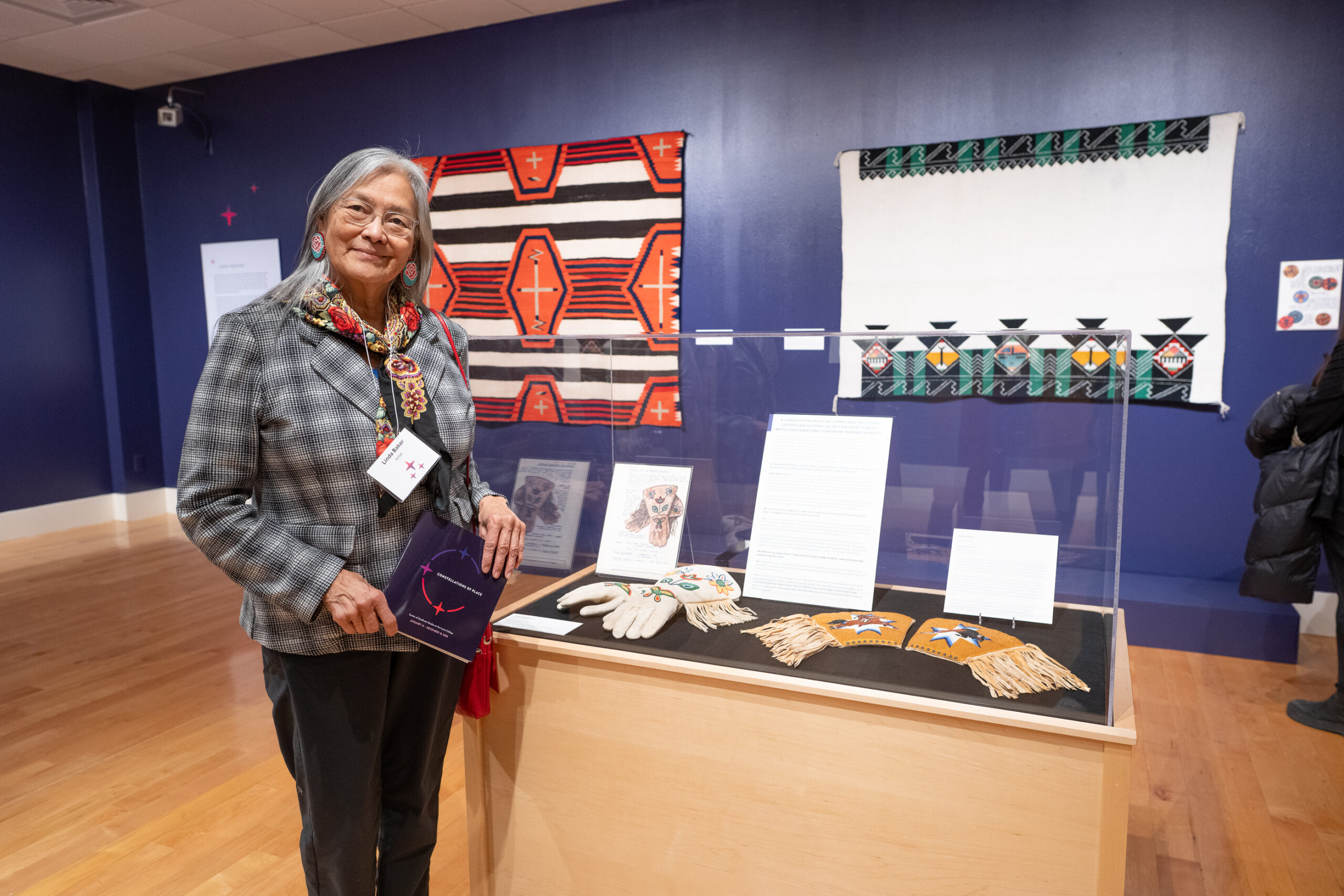
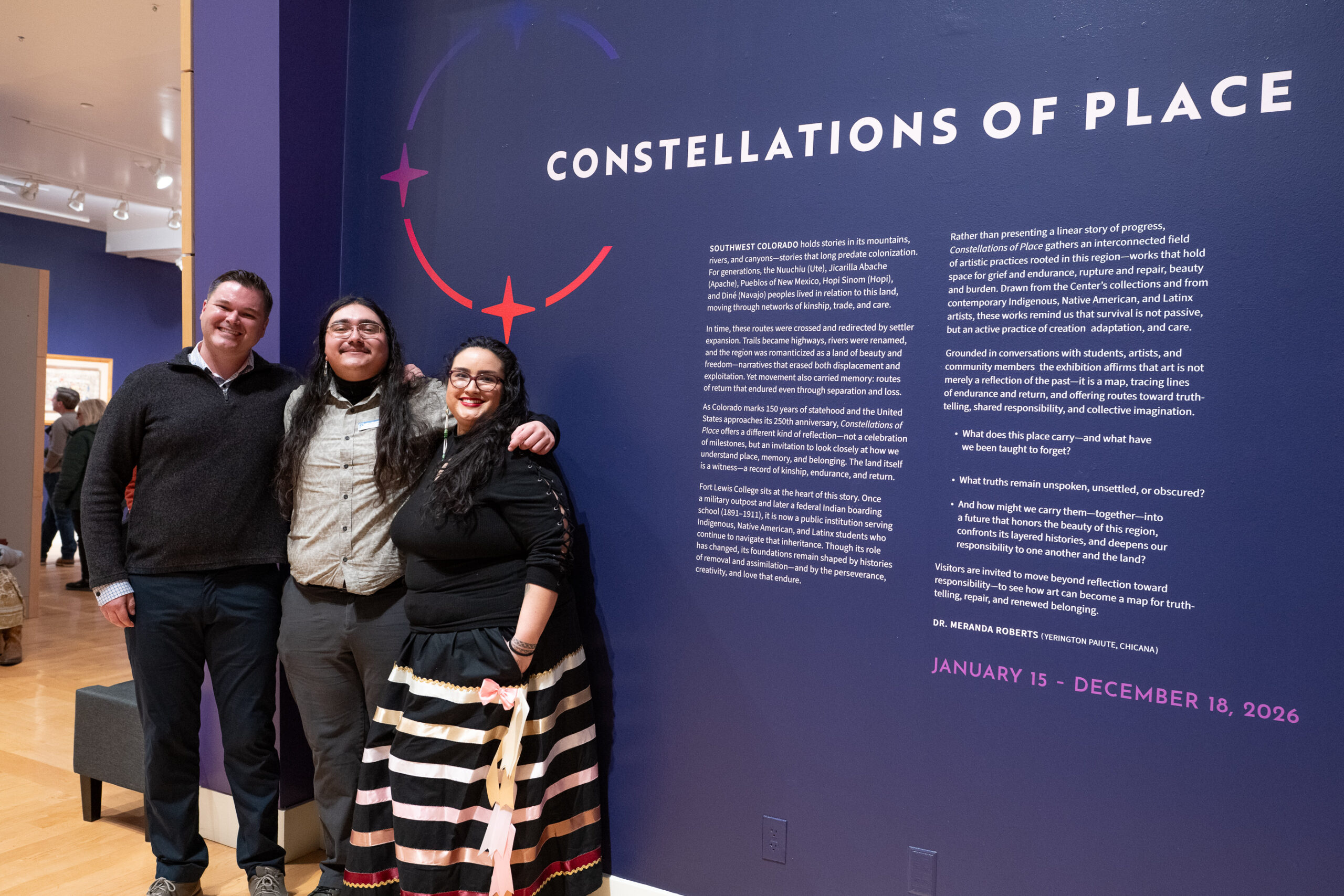
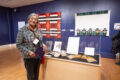
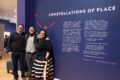
The Center of Southwest Studies of Fort Lewis College premiered the Constellations of Place art exhibit on Thursday, Jan. 15, a major exhibition that is rooted in the landscapes and layered histories of Southwest Colorado. This exhibit is guest curated by Dr. Meranda Roberts and features a selection of over 60 textiles, pottery, beadwork, 2D work, and mixed media pieces from both the Center of Southwest Studies’ permanent collection and the work of 13 invited contemporary Native American, Indigenous, and Latinx artists – including the beadwork of Southern Ute tribal member, Linda Baker.
Baker is a historian and beadwork artist, while also actively serving as a member on the Southern Ute Tribal Council – she is the granddaughter of Cassimero “Casey” Baker and Edna Russell Baker, she is the eldest daughter of six children born to Archie and Diana Baker (Cambridge), and is a proud grandmother to six. As an artist, Baker creates intricate beadwork, specializing in Ute regalia and Bear Dance accessories – her work has been featured in juried and invitational exhibitions including Santa Fe Indian Market and the Heard Museum Guild Indian Fair and Market.
“My beadwork journey began when I was a young girl, my grandmother would show me her older pieces of beadwork, for example a buckskin dress, and then she would point out the construction of each piece of beadwork and what made the item uniquely Ute,” Baker said. “Then after that, it was my mother’s influence by providing various tools for me to use and then eventually my own creativity from that point on – for myself I like to stick to the ‘older’ style of beadwork and art so that I can pass down these teachings just as they were to me,” she said. “I like making cuffs and gauntlets, I am also known for making cradleboards, canister purses, which we don’t see too often anymore. I like to make men’s ties and now I am currently working on a Ute style buckskin dress and a fully beaded vest.”
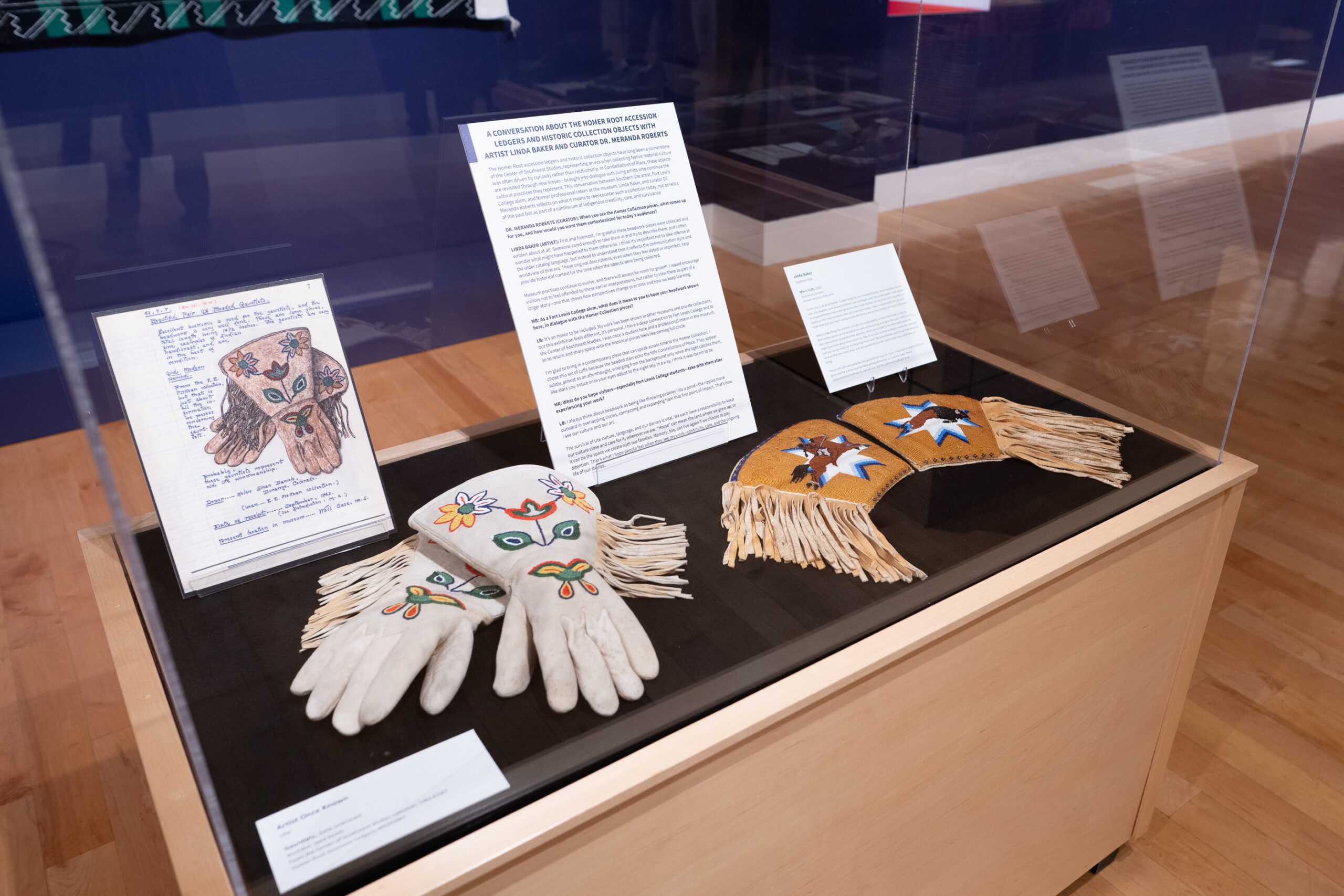
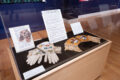
In the Constellations of Place exhibit, Baker’s work is featured next to a pair of beaded gauntlets created by a Ute artist ‘once known’ (from the Homer Root Collection). “When asked to submit a piece to this exhibit – first off, I was really surprised to even have a piece requested from me – I immediately thought of these cuffs that I made for Tony, the background actually has a five-point star pattern at the top and when you move them you can see the change in direction of the beads,” Baker said. “Then there is a hunter on horseback chasing a bison on top of an eight-point star – that is my contribution to the exhibit and lying next to my piece is a pair of full gauntlets from the Homer Root Collection, so there is that older style that you can contrast and compare to the modern art.”
The display case mentioned above features an interpretive description which reads, “The Homer Root accession ledgers and historic collection objects have long been a cornerstone of the Center of Southwest Studies, representing an era when collecting Native material culture was often driven by curiosity rather than relationship. In Constellations of Place, these objects are revisited through new lenses – brought into dialogue with living artists who continue the cultural practices they represent.”
In a conversation about the Homer Root accession ledgers and historic collection objects with artist Linda Baker and exhibit curator Dr. Meranda Roberts, they reflect on what it means to reencounter such a collection today, not as relics of the past, but as part of a continuum of Indigenous creativity, care and survivance. “When you see the Homer Collection pieces, what comes up for you, and how would you want them contextualized for today’s audiences?” Roberts asks.
“First and foremost, I’m grateful these beadwork pieces were collected and written about at all – someone cared enough to take them in and try to describe them, and I often wonder what might have happened to them otherwise,” Baker said. “I think it’s important not to take offense at the older catalog language, but instead to understand that it reflects the communication style and worldview of that era. Those original descriptions, even when they feel dated or imperfect, help provide historical context – Museum practices continue to evolve, and there will always be room for growth.”
Roberts then asked Baker, “What do you hope visitors – especially Fort Lewis College students – take with them after experiencing your work?”
“I always think about beadwork as being like throwing pebbles into a pond – the ripples move outward in overlapping circles, connecting and expanding from that first point of impact. That’s how I see our culture and our art.” Baker said. “The survival of Ute culture, language, and our dances is vital. We each have a responsibility to keep our culture close and care for it, wherever we are. “Home” can mean the land where we grew up, or it can be the space we create with our families – memory, too, can live again if we choose to pay attention – that’s what I hope people feel when they see my work. Continuity, care, and the ongoing life of our stories.”
Constellations of Place is a collaborative project between the Center of Southwest Studies, the Department of Reconciliation, and the Four Corners Bridging Institute at Fort Lewis College. The exhibit is the result of over a year of planning, listening sessions, and research. Constellations of Place will be on view until December 18, at the Center of Southwest Studies at Fort Lewis College. For more information, visit https://swcenter.fortlewis.edu/exhibits-events/exhibits/details/constellations-of-place