


For years, the Southern Ute Indian Tribe has been trying to use its allocated federal waters rights. Throughout this journey the Southern Ute Indian Tribe has gained a working relationship with outside entities such as the Bureau of Reclamation (BOR) and the Upper Colorado River Commission (UCRC).
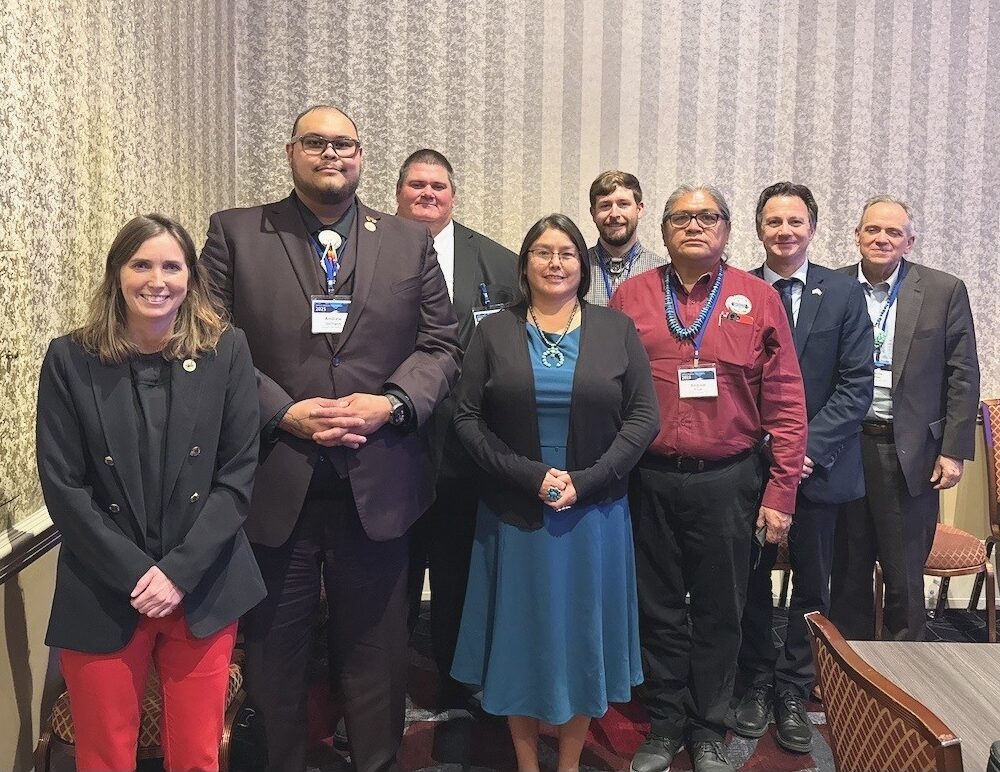
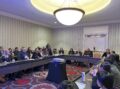
Tuesday, Dec. 16 through Friday, Dec. 18, myself (Councilman Gallegos) along with Legal Water Attorney, Lisa Yellow Eagle; Natural Resources Director, Andrew Frost; Water Resources Division Head, Pete Nylander and Water Resources Technician, George Gavrielides attended the Colorado River Water Users Association (CRWUA) Conference held in Las Vegas, Nev.
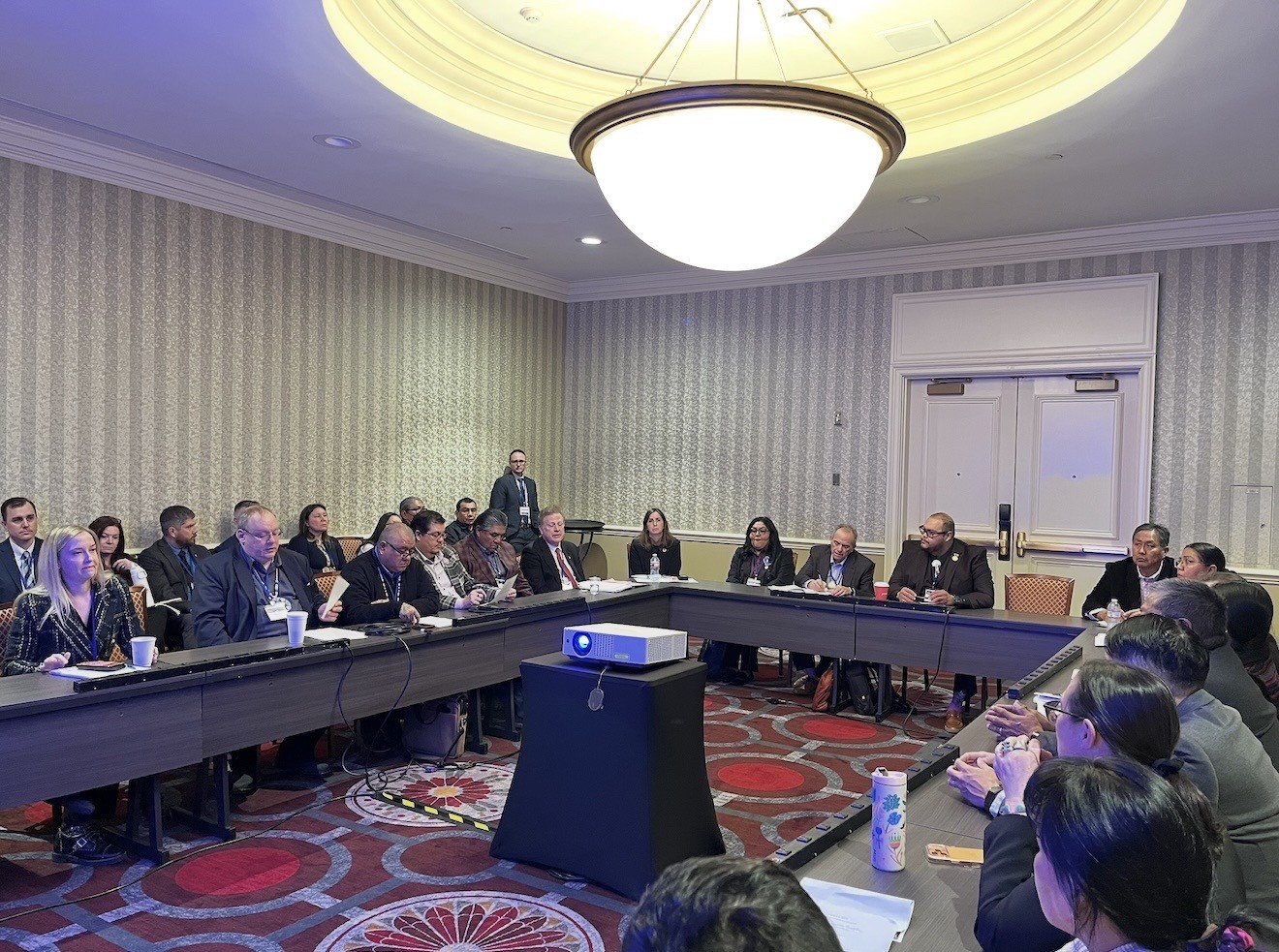
Founded in 1945, CRWUA has served as an organization where members from throughout the Colorado River Basin are able to meet and develop personal relationships to allow frank discussions of the many issues involving the Colorado River. This gave the Southern Ute tribal leadership and staff an opportunity to meet with federal, state and tribal representatives, the Upper Colorado River Commission, and other organizational staff to discuss concerns and priorities. This is also an opportunity for tribal leadership and staff to learn about additional Colorado River issues and help each other network with other tribal, state, and federal leaders and staff for a healthier Colorado River.
Southern Ute has been engaged with the Post-2026 guidelines. What is that you may ask? Well to not bore you, it is a federal document that helps maintain water usage and users that draw from the Colorado River, simply put … it’s a policy or document guiding water users within the Colorado River Basin on what they can and can’t do to help mitigate the ongoing years of drought, water usage from development of new communities and population growth, well I think you get the picture. Oh, I might add this thing called a savings pool for Lake Mead and Powell, I’ll touch on that in a minute. The Colorado River is defined into two sections: The Upper Basin being Colorado, New Mexico, Utah, and Wyoming. The Lower Basin is classified as Arizona, California and Nevada, spanning seven states in total. Hmmm some might say that’s not so bad, seven states out of the whole United States, but wait … what about the tribes? Shouldn’t they have a say, I mean Native American tribes were here first, right? This is where it gets tricky. Not only are there local state and federal entities in each of the states, but there are also Tribes. How many you might ask? More than 30 Tribes, including Southern Ute, rely on the water that either gathers or passes through the connecting rivers, streams, lakes, and so forth.
Let’s focus on our Tribe. Why is it important to be involved in the conversations and have a seat at the table for the upcoming Post-2026 guidelines? For one, the Southern Ute Indian Tribe has federal water rights that go back to 1868. Also, we have water that is undeveloped that flows through all seven rivers that pass through our reservation downstream to New Mexico.
Think of it as a big snowball rolling downhill, the top of the hill being the Upper Basin as the snowball rolls into the Lower Basin that I mentioned earlier. Still, why is this important that the snowball that’s rolling downhill is our allotted water rights that we haven’t developed, and the Lower Basin is used to getting this extra snowball meaning our water that we haven’t used yet. So, it’s important we use all our water we have rights to because the second we do, the lower states may ask where the rest of the water is that’s been “left over.” Well, that “left over” that the Lower Basin has gotten accustomed to receiving, once it’s less, they may say things like “there’s a shortage of water!” No, actually that water is ours.
Examples of water being put to use may include projects such as treating the water to drink, using it for our natural resources such as our deer, elk and bison herds or our agriculture needs such as, rancher’s and farmer’s range units. One way or another a living being relies on this water, this is where the Post-2026 savings pool for Lake Mead and Lake Powell comes into play. The Southern Ute Indian Tribe is involved with a group called the Ten Tribes Partnership (TTP), where tribes from the Upper and Lower Basins meet monthly to discuss items that we all agree on to help the overall health of the Colorado River, while also respecting at all times the different wants and needs of each tribe and what’s in the best interest for each tribe. Some tribes aren’t as fortunate as we are and aren’t able to develop their water, maybe due to lack of funds, land status, technical expertise or maybe their water rights aren’t as strong … whatever the case may be.
With the new Post-2026 guidelines the TTP came up with this concept if a tribe isn’t using or unable to use its water, what options do they have? One thought is to lease their water. I mean that’s better than just letting it go downstream, and others will benefit from it, and this would leave the tribes out. This new savings pool concept would allow a tribe, if it’s the best interest for them to do so, lease their water for a portion of time, and get compensated for it.
Let’s be real, I can only talk for Southern Ute, but leasing our water while we get some of these projects off the ground buys us time, and we get paid for it. I want to be very clear, I’m not saying the Southern Ute Indian Tribe sells out, because this situation is very delicate and you simply can’t put a dollar amount on a life, and water plays a big part of the future and generations to come. This savings pool idea is better than letting the next-door neighbor access the water for free, we might as well get paid for it. All I’m saying is it’s another option if approved in the Post 2026 guidelines.
My number one priority before considering leasing or selling water is to use it for our own use and the community. Such as looking into another water treatment plant or energy projects, like this past spring, the Tribe used some of our Animas-La Plata (ALP) water that is designated for industrial use and municipal use or it goes back to this comprehensive ag project that Vice Chairman Pinnecoose and Treasurer Olguin have been working on to revitalize farming on the Southern Ute Reservation, making our land flourish.
You may ask why do we need federal and state agencies like the BOR or the Bureau of Indian Affairs (BIA). Well, let me explain, the BIA has a trust responsibility to the Southern Ute Indian Tribe to maintain the Pine River Indian Irrigation Project (PRIIP). The PRIIP is one of the main irrigation lines that many of our tribal member assignments or allotments, as well as non-tribal members, rely on as a water source due to our checkerboard reservation. The integrity of the project is in poor condition considering the last major improvements were in the 1950s-60s. Our Water Resources Department, headed by Pete Nylander and his crew, work tirelessly to keep the delivery of water limping along despite minimal federal assistance.
So why go to CRUWA? This is where the whole article ties together, I hope I haven’t lost you or have you too confused yet.
I learned long ago that if you want to make a change, get all the decision makers in the same room, so everyone hears it once from the source.
The Tribe regularly applies for grants from state and federal agencies to support essential projects. In 2023, we secured approval for several grants intended to fund major improvements to irrigation systems, including PRIIP and surrounding canals.
However, changes in federal policy have delayed the release of these funds. While the grants were approved, the implementation has been put on hold, leaving us in a position where promised resources have yet to be delivered.
This is why it’s important to have professional relationships to help lobby and advocate. Looking at natural resources, the fight will continue no matter who you have on your side, but it helps to have support at all levels.
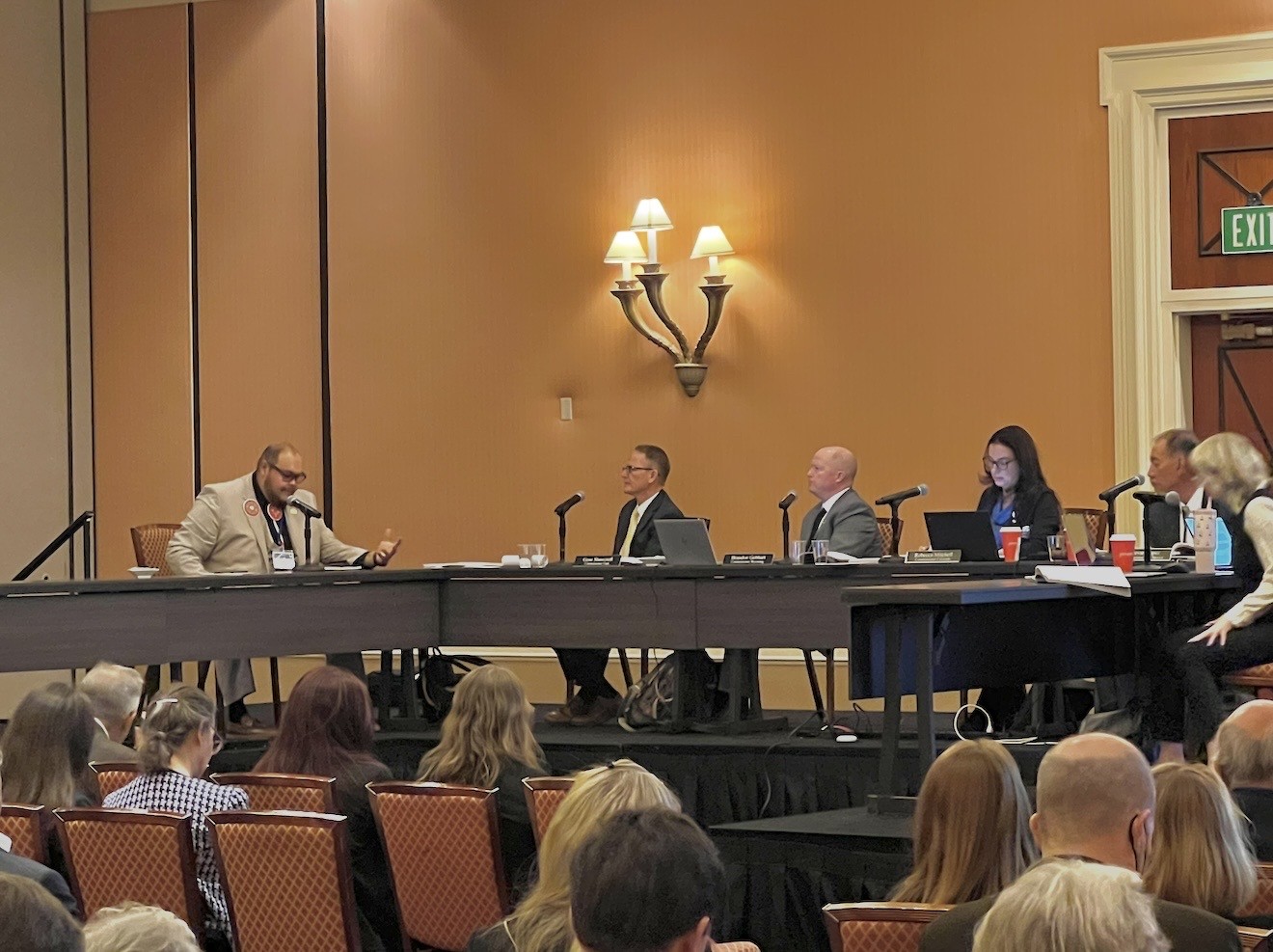
On Tuesday, Dec. 16, at the conference, I attended and spoke during the UCRC Special Meeting about the importance of this grant funding and the unique land status of the Pine River. I strongly emphasized, “the Southern Ute Indian Tribe will always prioritize what is in the best interest of our membership. However, because of land status and the delivery system, these funds will also benefit surrounding non-tribal farmers. This reflects a principle we’ve long embraced from Chairman Leonard C. Burch: what is good for the community is good for the Tribe. Those words continue to guide us today.”
In conclusion, I hope this helps you, the tribal membership, understand why attending these water meetings is so important. These discussions are complex and technical, but having a strong presence ensures that our voices are heard, and our priorities remain front and center. Representation matters – and every time we show up, we make a difference for our Tribe and future generations. Thank you for your support, and if you have any questions, please reach out. I’m always happy to share more and keep the conversation going.