

What It Is, What It Isn’t, and Why It Matters
Household hazardous waste – better known as HHW – is found in nearly every home, often tucked under sinks, stored in garages, or forgotten in sheds. While many of these products are staples of routine maintenance and cleaning, they contain ingredients that can pose significant risks when misused or improperly discarded.
What Counts as Household Hazardous Waste
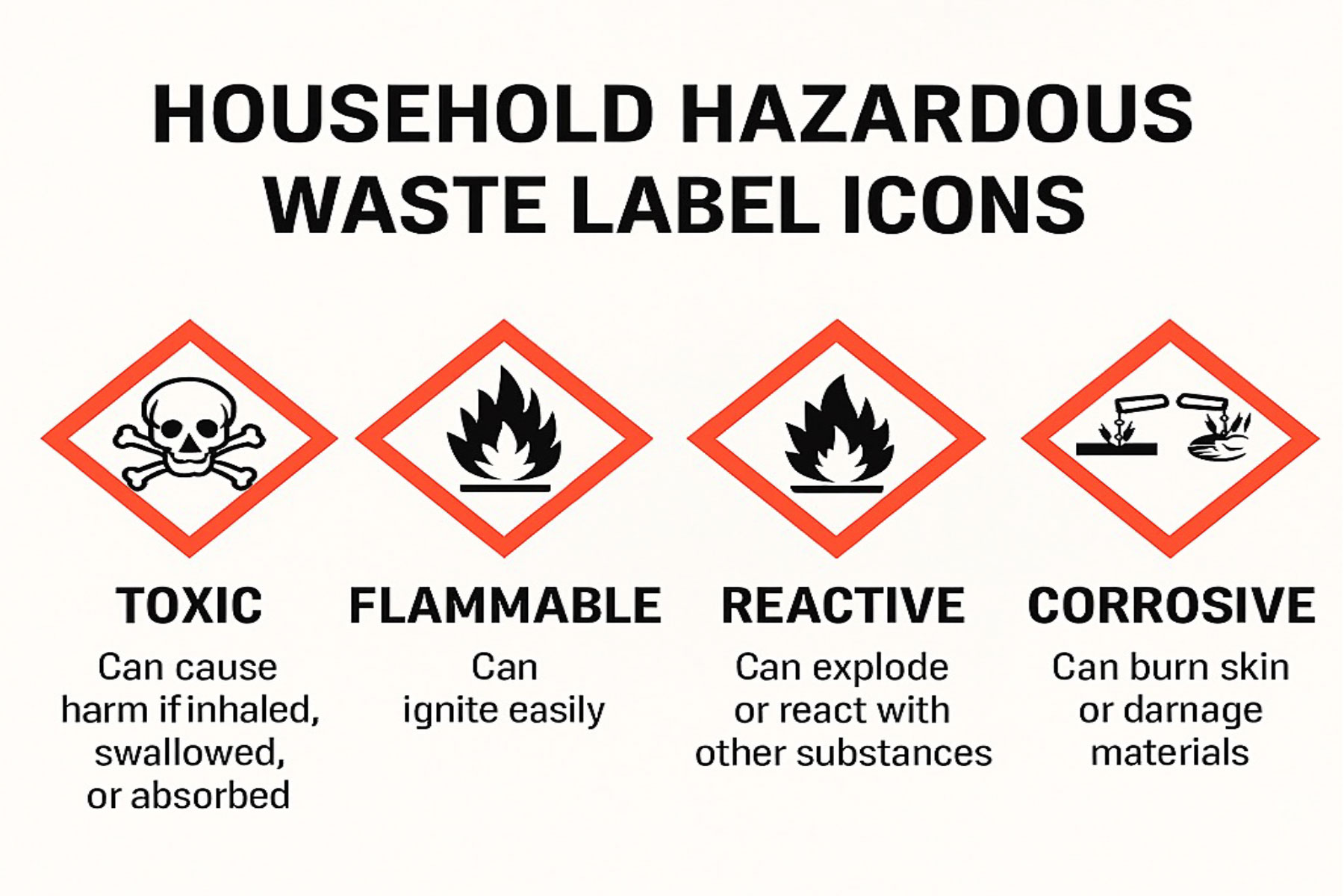
According to the U.S. Environmental Protection Agency (EPA), household hazardous waste includes leftover or unwanted household products that contain toxic, corrosive, ignitable (flammable), or reactive chemical ingredients. Common HHW items include paints, cleaners, oils, batteries, pesticides, and solvents. These products can catch fire, react, explode, or pose toxicity risks under certain conditions. [epa.gov]
Experts note that many everyday products become hazardous only once they are no longer needed or are improperly stored or disposed of. For example, items like motor oil, paint thinners, fluorescent bulbs, and pesticides all meet the criteria for HHW once discarded.
What HHW Is NOT
Not all waste from the home is considered hazardous. Products that do not contain reactive, toxic, flammable, or corrosive chemicals are not classified as HHW. Materials such as ordinary paper, textiles, plastics, or food scraps fall outside this category. Regulations define hazardous waste based on chemical characteristics – not on where the product is used.
Why Labels Matter
Products labeled with words such as “Danger,” “Warning,” “Caution,” or other hazard indicators like “Flammable,” “Combustible,” “Corrosive,” “Toxic,” “Poisonous,” or “Reactive” should be treated as potentially hazardous. These signals are designed to alert consumers to chemical hazards and highlight safe handling and storage practices. They can also guide consumers on how to properly dispose of HHW and what to do if an accident occurs, such as spills, ingestion, handling and storage practices.
(If you need immediate poison assistance, call 1-800-222-1222 or visit Poison Help)
Dangers of Improper Handling and Disposal
Improper disposal – such as pouring chemicals down drains, tossing them in household trash, or dumping them outdoors – can create serious environmental and human health hazards. Household hazardous waste can pollute soil, contaminate water supplies, and release harmful gases, endangering sanitation workers, wildlife, and community health hazards. Always follow the label directions when it comes to using, handling and disposing of products especially if there are indications that it might be HHW.
Many hazardous waste items can leach toxic substances into the ground or emit fumes that degrade indoor and outdoor air quality. Batteries can release toxic heavy metals, paints and solvents can contaminate groundwater, and pesticides can harm unintended plants and animals.
Potential Health Risks
The consequences of exposure to household hazardous waste can be severe. The EPA has documented over 1,600 hazardous waste contamination sites in the U.S. where toxic chemicals have created ongoing health risks. These exposures have been linked to neurological damage, respiratory illnesses, and other long-term health problems, particularly among children – more than 245,000 of whom live in areas affected by hazardous waste pollution.
Toxic fumes from improperly stored chemicals, accidental mixing of reactive substances, or contamination of household surfaces can also pose acute risks as well, including chemical burns, poisoning, and fire hazards.
Staying Safe at Home
Experts and environmental agencies recommend the following steps to minimize risks:
- Keep products in original containers with labels intact to avoid misuse or dangerous mixing.
- Store HHW away from heat, children, and pets and separate flammable, corrosive, or reactive products.
- Never mix chemicals, as some combinations can ignite, explode, or release toxic gases.
- Use local hazardous waste collection programs instead of throwing HHW into regular trash or dumping down drains, many communities offer spring and fall cleanup events to support safe disposal. Each Spring/Fall the Tribe holds a Clean Up event to support safe disposal of HHW. In Durango the City offers an Annual HHW Collection event each Fall. Details can be found on their website at https://www.durangoco.gov/373/Household-Hazardous-Waste
- Choose safer alternatives when possible, reducing the amount of hazardous material stored at home is a good way to reduce overall HHW. More information can be found at https://ecologyactioncenter.org/hhw/hhw-alternatives/
Understanding what qualifies as household hazardous waste – and how to manage it responsibly – is an important step toward protecting our health, communities, and environment. By properly storing, using, and disposing of HHW through designated collection programs, households can reduce pollution, prevent accidental exposure, and keep harmful chemicals out of landfills, waterways, and the air we breathe. Small actions at home can make a meaningful difference, helping create safer homes and healthier communities for current and future generations.
Look for these labels and keywords as indicators that a product may be a household hazardous waste:
Please utilize the Southern Ute spring and fall cleanups to safely dispose of HHW. Look for more information coming soon!