

Tribe partners with ICL on air quality initiative


Colorful flags denote regional air quality
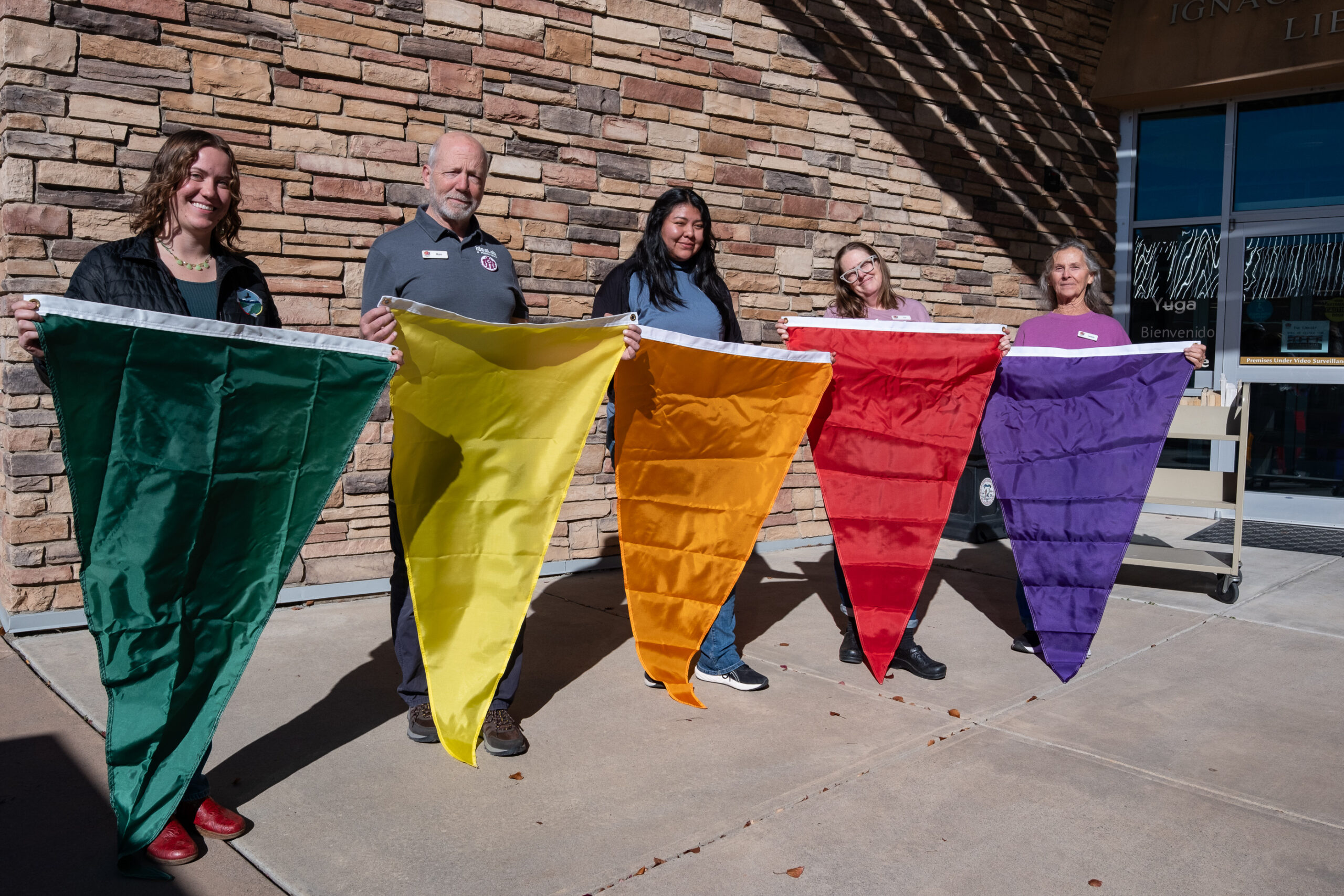
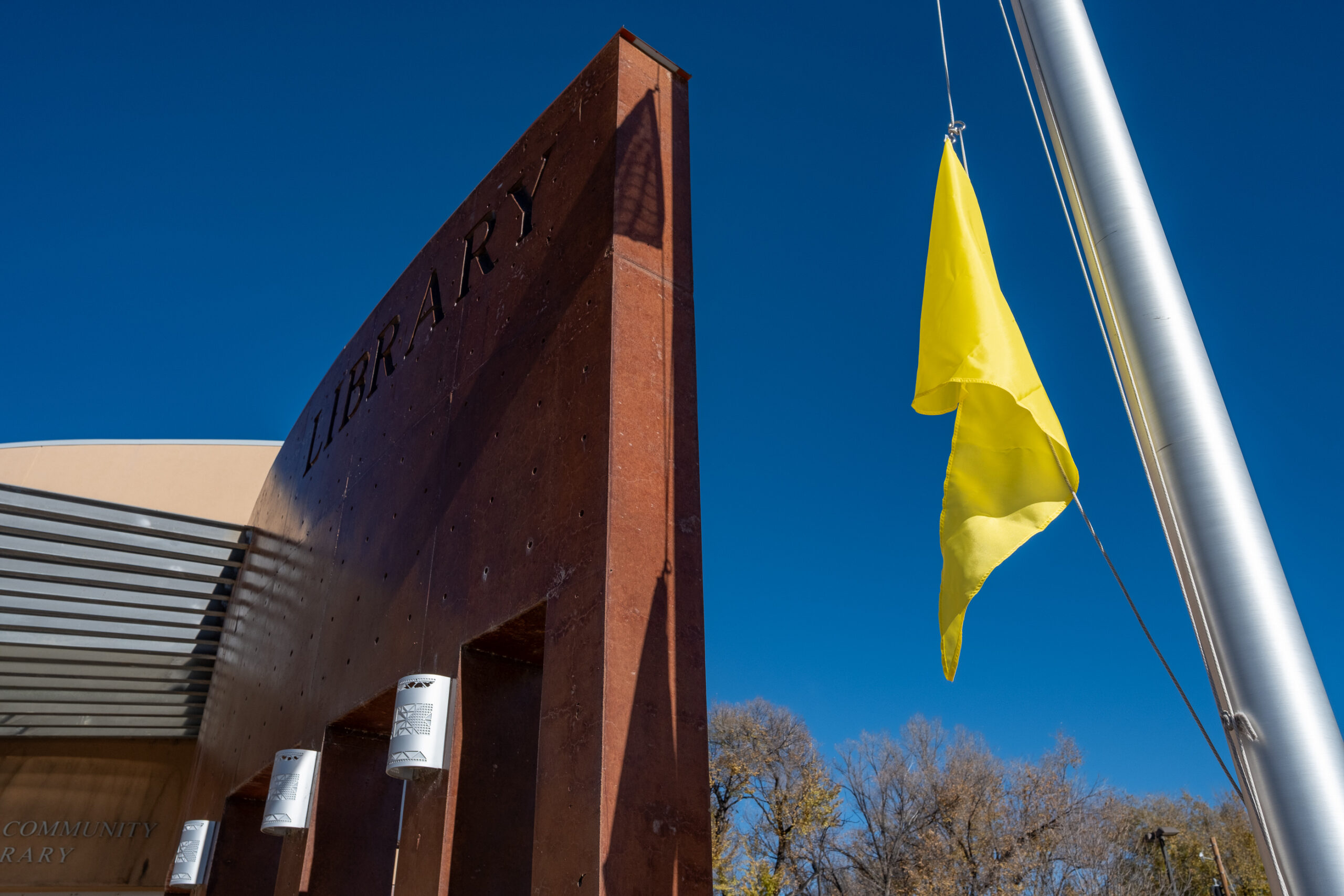
The Southern Ute Indian Tribe’s Air Quality Division (AQD), in collaboration with the Ignacio Community Library, has begun to fly color coded flags that represent air pollution levels. The flags will be flown outside the Ignacio Community Library and the Environmental Programs/Justice and Regulatory Administration building. The AQD hopes that flying the brightly colored flags near the center of town will gain attention for air quality safety in the Ignacio community. The flag colors correlate with a nationally recognized method for quantifying air quality called the Air Quality Index (AQI). The AQI value is calculated based on the levels of five criteria pollutants found in the air. These air pollutants can pose health risks to the public.
Similar to the brightly colored signs seen on the side of roadways that help residents understand daily fire danger, the AQI flags represent the potential daily risk that poor air poses to the public. Green corresponds to good air quality while red corresponds to unhealthy air quality. AQD worked with the Cultural Preservation Department to include Ute language in an air quality flag informational flyer that outlines these color ratings and their corresponding recommendations. Dr. Stacey Oberly, Ute Language Program Manager, who provided Ute translations for the Air Quality Colors flyer, believes that this is “a wonderful way to get Ute Language out into our community”.
The AQI ranges from 0 to 300 and is divided into 5 colors. The colors come with activity recommendations and communicate the AQI scale in a clear and concise way.
Ignacio and the surrounding areas can experience air quality impacts from small particles suspended in the air called Particulate Matter (PM). Common sources of PM include regional forest fires in the summer and woodfire smoke in the winter. Air quality isn’t solely determined using PM pollution; ozone is also used to calculate the local AQI. Ozone is a colorless gas that is harmful to the heart and lungs when inhaled. The concentration of ozone in the air is highest in the summer months and is responsible for a majority of the Southern Ute Indian Reservation’s moderate to unhealthy AQI days. On especially poor air quality days the AQD sends out notifications. While poor winter air quality days can occur, the majority of these notifications are sent during the summer months. The AQD hopes that starting this flag program will help to show residents these seasonal shifts in air quality.
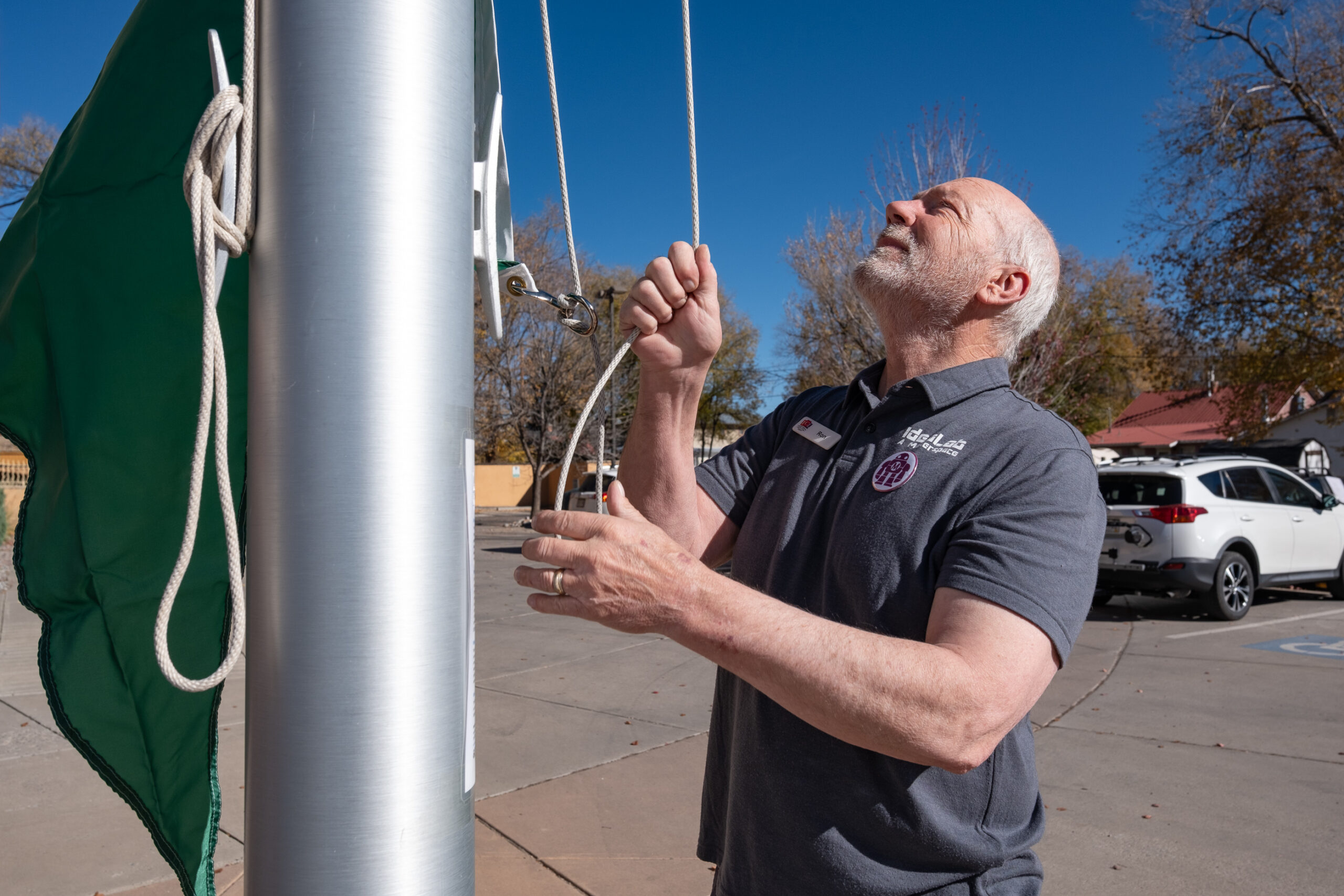
Every day, the US Environmental Protection Agency (US EPA), forecasts a predicted peak AQI level for locations across the US. The staff at the Ignacio Community Library will be raising the corresponding colored-flag to match the AQI forecast for Ignacio. The assistant director of the Ignacio Community Library (ICL), Liz vonTauffkirchen, expressed ICL’s eagerness to participate in this collaboration saying, “it allows us to provide important, valuable information to the community, it raises public awareness about air quality, and it further strengthens our relationship with the Southern Ute Tribe; so it’s a perfect fit for ICL.” Community members are advised to start considering the colors of these flags when planning outdoor physical activities. While these forecasts are estimations generated by regional scale models, AQD has real-time data for the local AQI available on their ambient monitoring website here https://www.southernute-nsn.gov/government/departments/epd/air-quality/ambient-monitoring/.
These real-time measurements may not always match the forecasted peak AQI for a given day. For example, on a day the flag is yellow, the morning AQI may start off as green and then shift to yellow as pollutant levels increase. This pattern is often seen when ozone is the primary contributor to poor air quality. The shift in ozone throughout the day is due to change in sunlight. Sunlight is the primary ingredient for the chemical reaction that creates ozone. As a result, ozone levels on shady mornings are often lower than the forecasted AQI.
Some days it can be obvious that the air quality is poor, like during forest fire events with strong-smelling thick smoke. Other times it is less obvious, such as when ozone levels are high. The AQI flags help to make the invisible visible by offering a warning to the public on days when air is forecasted to be bad. Luckily, our air here in Southwest Colorado is generally clean. AQD encourages residents to be prepared for days when the red or orange flags are flying, but most days you can expect to see a green flag raised high and proud! Having the flags visible in the center of town will help provide valuable information needed to protect ourselves and our loved ones when air pollution reaches unhealthy levels.