




How to protect your health
Each summer, the skies over the Southern Ute Indian Reservation in Southwest Colorado are increasingly hazed with smoke. This isn’t just an aesthetic change to the beautiful San Juan Mountains—it’s a growing public health concern, one that environmental scientists, and health professionals are tackling head-on through a better understanding of wildfire smoke, air quality monitoring, and its impacts on community health.
Every year, as the weather turns warmer and drier, the Southern Ute Indian Reservation and surrounding Four Corners region enter what is now commonly known as fire season—a stretch from late spring through early fall marked by heightened wildfire risk, dry vegetation, and increasingly smoky skies.
Summer fire season has always been a natural part of the ecosystem, but in recent decades. Warmer temperatures, reduced snowpack, and prolonged drought have combined to create ideal conditions for wildfires to ignite and spread quickly. Fires can be sparked by lightning storms or human activity that may cause a flare up under dry conditions. Preventing hazardous wildfires can take many different forms.
“As a forester and natural resource manager I view fire as a management tool that is a necessary part of fire adapted ecosystems such as ponderosa pine,” said Brian Gideon, Forestry Division Head for the Southern Ute Indian Tribe. “Because we have been suppressing wildland fires for approximately 120 years, prescribed burning is a necessary tool used to restore ecosystem function in the ponderosa pine forests of the southwest. The impacts from smoke due to prescribed burning are relatively short lived compared to catastrophic wildland fires that may have the potential to burn for months. Please realize this next time smoke from a prescribed burns impacts you.”
Even when the flames themselves are far away, smoke can travel vast distances, affecting air quality on the Southern Ute Reservation. While land managers use prescribed fire to reduce the risk of larger, more destructive wildfires, it’s also important for individuals to be prepared when smoke impacts occur.
Monitoring local air quality conditions is one of the best ways to protect yourself and your family during fire season. The Southern Ute Air Quality Division actively tracks pollutants found in smoke to help the community stay informed and make safer choices—like staying indoors, using air purifiers, or limiting strenuous outdoor activities—especially on days when air quality levels are poor.
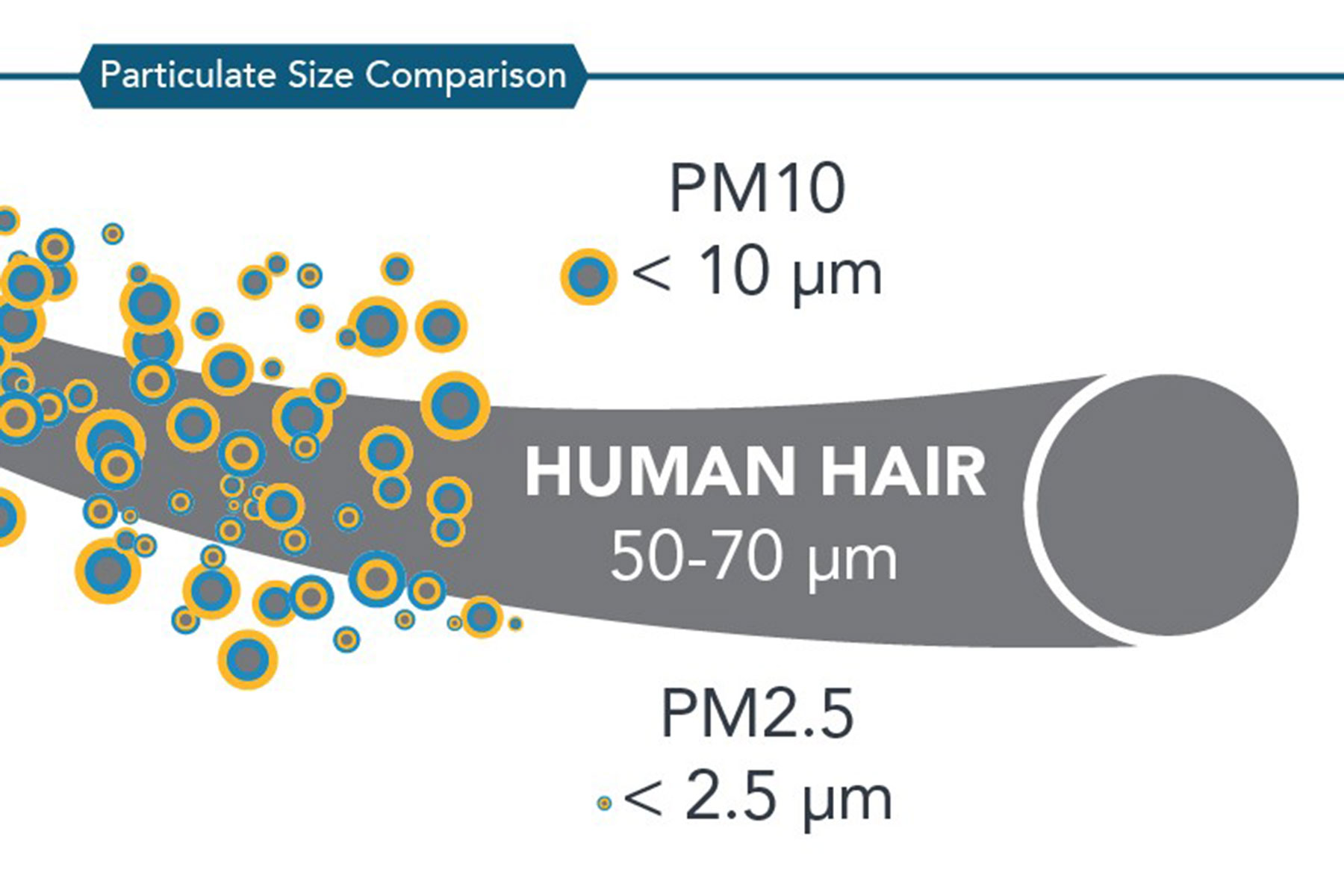
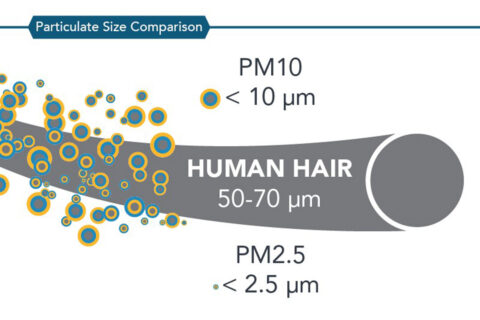
Wildfire smoke is a complex mixture of gases and fine particles. The most concerning component for human health is PM2.5—particulate matter that is less than 2.5 micrometers in diameter, or about 30 times smaller than the width of a human hair. Because these particles are so small, they can travel deep into the lungs and even enter the bloodstream.
Together, they pose a risk to public health, especially for sensitive populations such as children, elders, people with asthma or heart conditions, and outdoor workers. Unhealthy pollution levels are communicated using Air Quality Index values.
Understanding the Air Quality Index (AQI)

Image Credit – California Air Resources Board
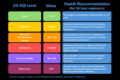
Air Quality Index (AQI) is a number that is calculated based on the concentration of different pollutants detected in the air. These numbers, along with the associated color-coded scale, provide a quick way to determine whether the air is safe to breathe. The lower the number, the cleaner the air and less pollution. Alternatively, higher numbers indicate higher levels of air pollution.
Good air quality has an AQI between 0-50 and is indicated by the green shade. When wildfire smoke drives the AQI into the orange, red, or purple zones, the Tribe’s Air Quality Program issues advisories through the Tribal Information Services urging residents to take precautions, which may include limiting outdoor activity, especially during peak smoke hours in the early morning and evening.
Prolonged exposure to wildfire smoke can lead to a variety of health issues, ranging from mild to severe. Short-term effects include coughing, sore throat, headaches, itchy eyes, and fatigue. For individuals with asthma, chronic obstructive pulmonary disease (COPD), or cardiovascular disease, smoke can trigger serious complications, hospital visits, or worse.
There is also growing concern about long-term impacts. Recent studies suggest that repeated smoke exposure may contribute to the development of asthma in children and increase the risk of stroke or heart attack in individuals with preexisting conditions.
When air quality is poor, the most effective action is to reduce exposure. That can mean staying indoors, using air purifiers, sealing windows and doors, and avoiding physical exertion outdoors. N95 masks can also help filter out fine particles during heavy smoke events, although they are not recommended for routine use unless needed.
If you notice that people in your home are feeling the effects of wildfire smoke—like coughing, headaches, or breathing issues—using even one portable air cleaner can make a big difference if you use it in the room where you spend the most time. Think of it like creating a small “clean air” zone in your home, instead of trying to clean the air in the whole house, which can be harder to do. This EPA web page has helpful, easy-to-read info on how to use air cleaners in your home: https://www.epa.gov/indoor-air-quality-iaq/guide-air-cleaners-home.
“We’re all in this together,” Southern Ute Air Quality Division Head, Danny Powers said. “Taking care of ourselves and looking out for our neighbors—especially our elders, youth, and those with health conditions.”
As wildfire seasons become longer and more intense, the Southern Ute Indian Tribe Air Quality Program is adapting through preparedness, monitoring, and education. Air quality monitoring—powered by tools like Particulate Matter sensors and understanding the Air Quality Index —is just one piece of a larger effort to protect the land, and the people, who call this place home.
To stay updated on air quality conditions on the Southern Ute Indian Reservation, visit the Tribe’s Air Quality Program Monitoring website for real time Air Quality Data and Health Notifications (https://www.southernute-nsn.gov/government/departments/epd/air-quality/ambient-monitoring/).
When the smoke rolls in, knowledge is power—and community is everything.