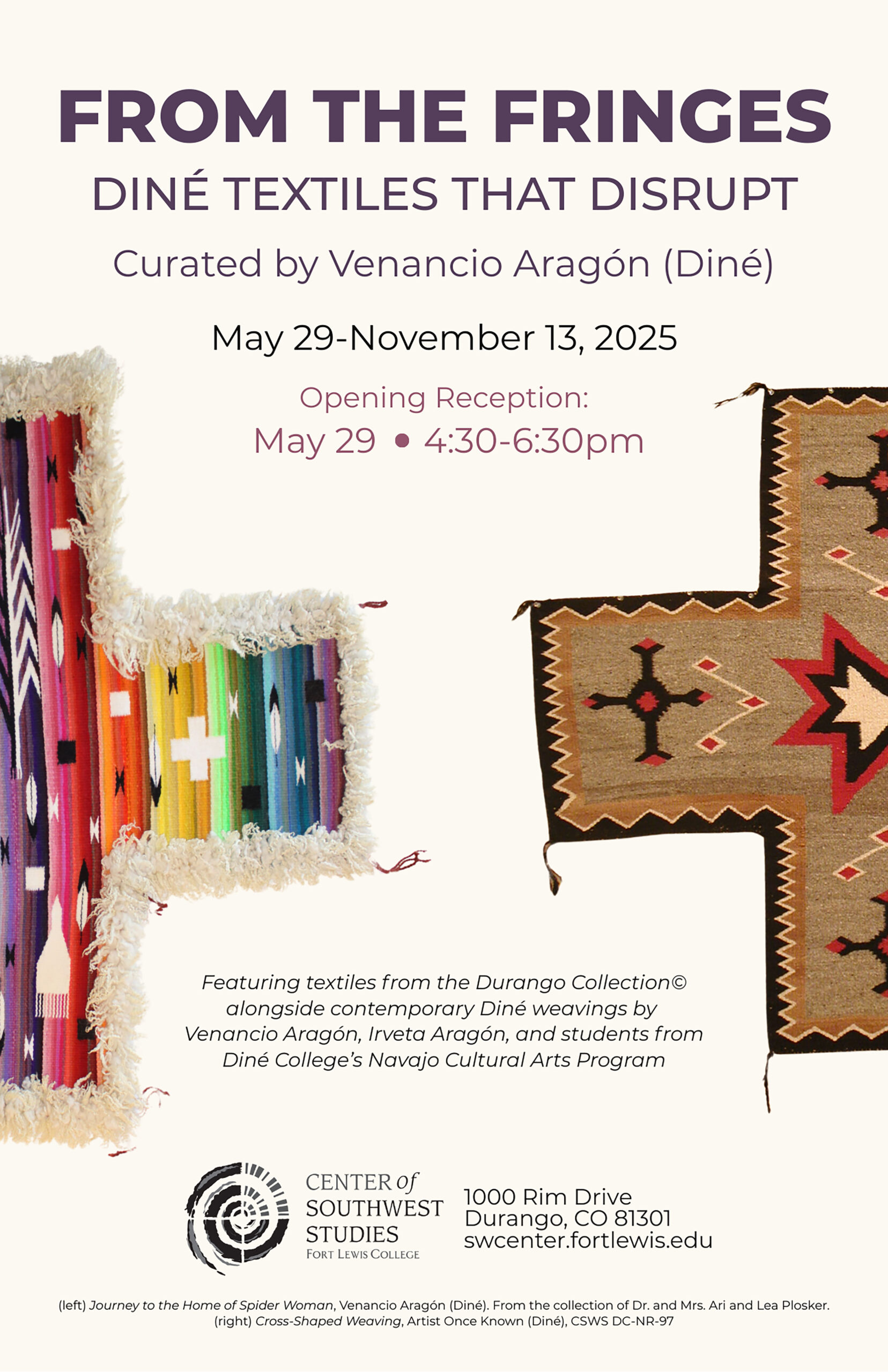

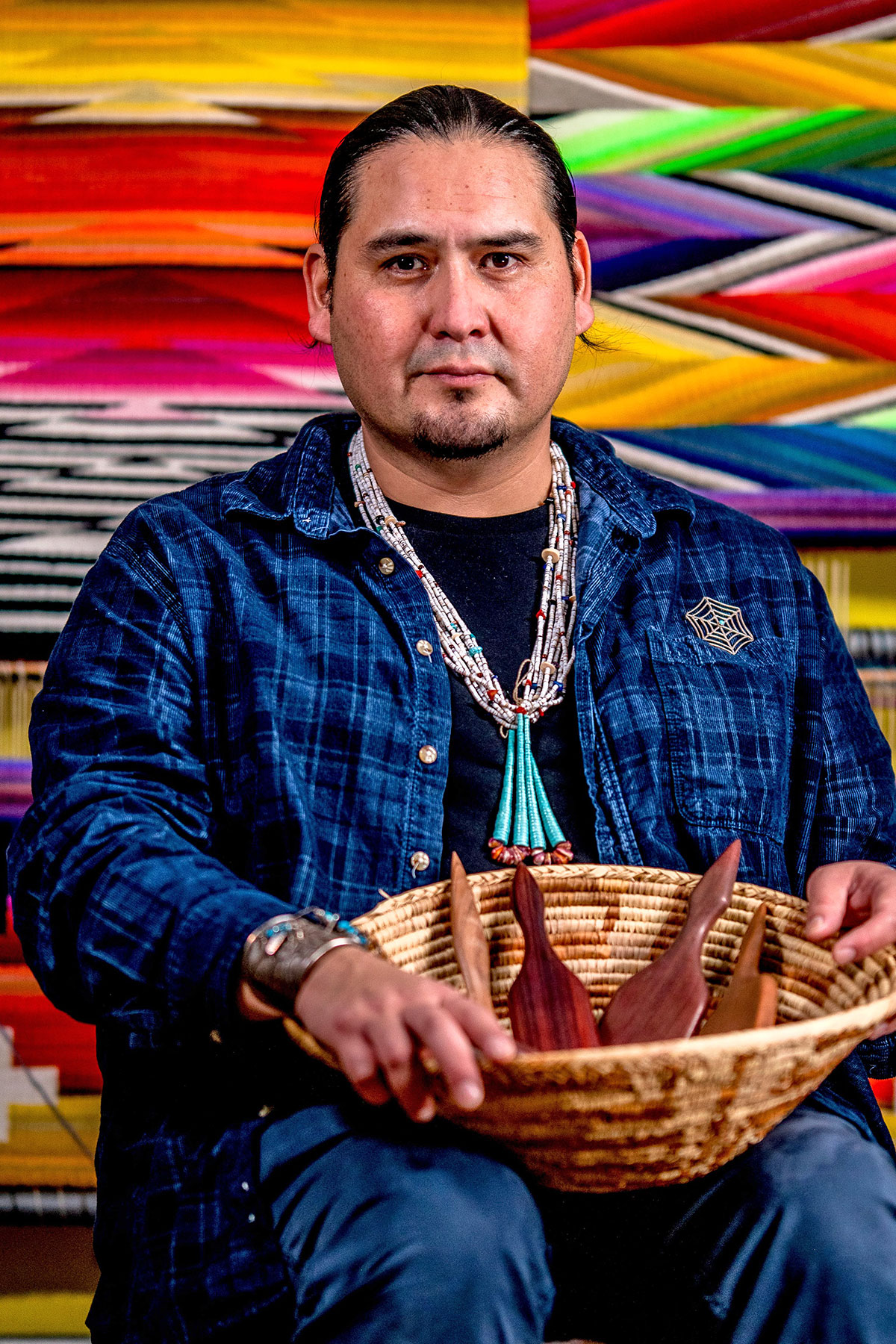


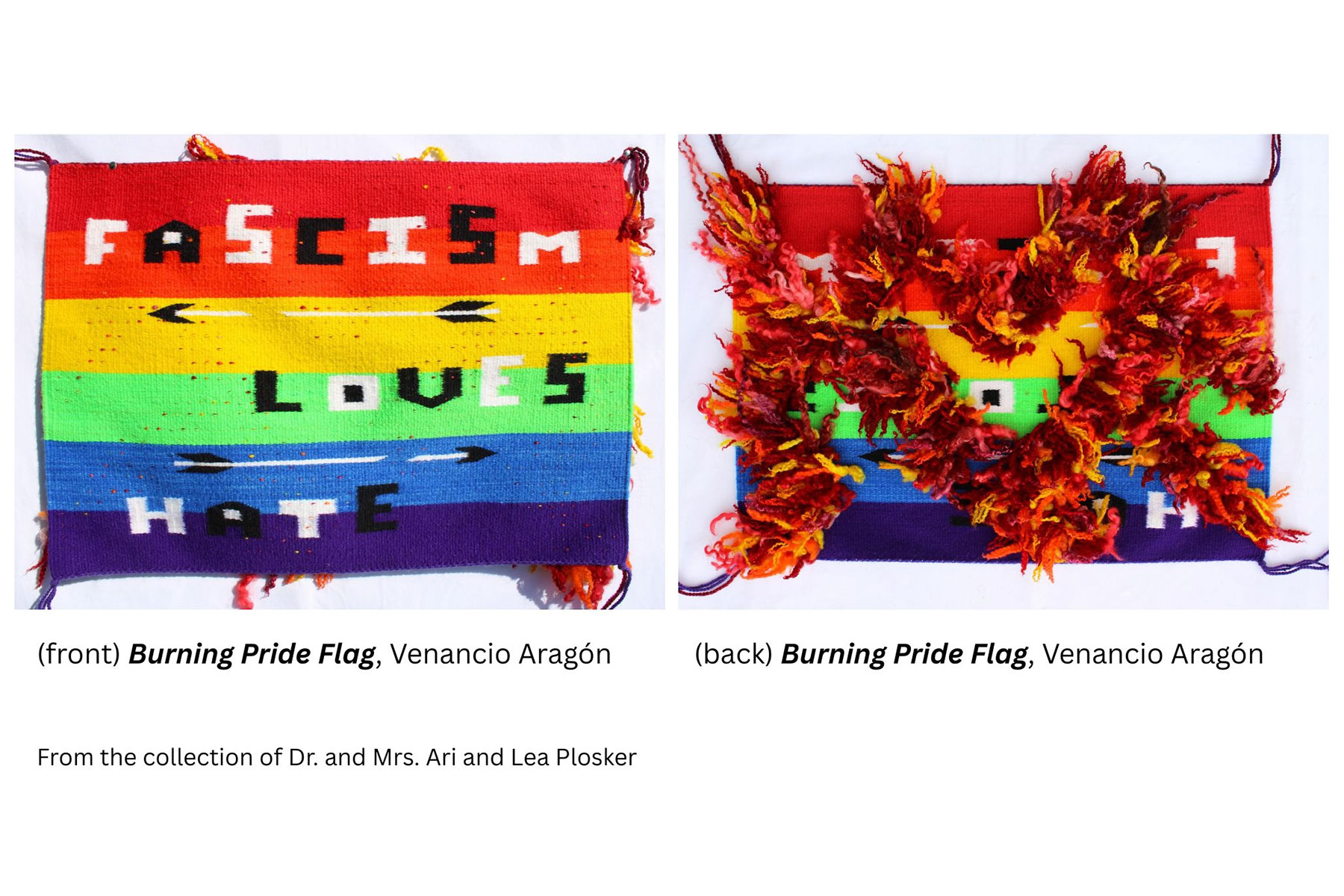


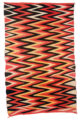

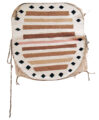


The Center of Southwest Studies at Fort Lewis College (FLC) is pleased to present From the Fringes: Diné Textiles that Disrupt, an exhibition that will feature weavings from the Center’s weaving collections, alongside a range of pieces by Diné weavers Venancio Aragón, his mother Irveta Aragón, and Aragón’s students from Diné College’s Navajo Cultural Arts Program.
The exhibition, which is guest curated by Aragón, highlights a range of technical and aesthetic oddities that disrupt and complicate traditional perspectives and interpretations of Diné textiles by Western scholarship. By showcasing historical work alongside contemporary pieces, From the Fringes seeks to celebrate those techniques within the Diné textile repertoire that have been overshadowed and understudied, while emphasizing their artistic innovation, experimentation, and the cultural, personal, and intergenerational significance of weaving within Diné communities – past, present, and future.
From the Fringes will open on Thursday, May 29, with a reception from 4:30-6:30 p.m., and be on view in the Center’s exhibition gallery through Nov. 13.
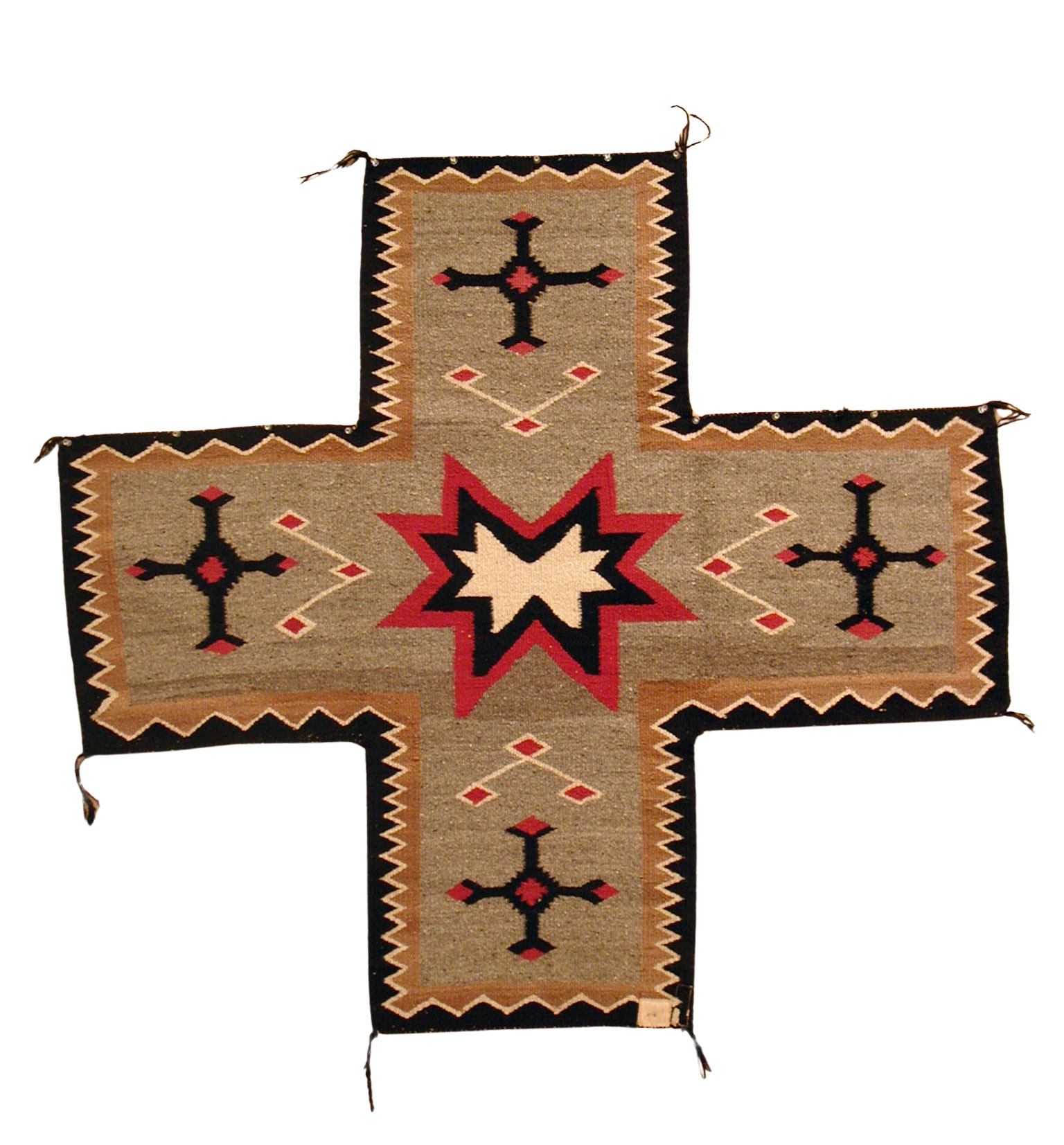
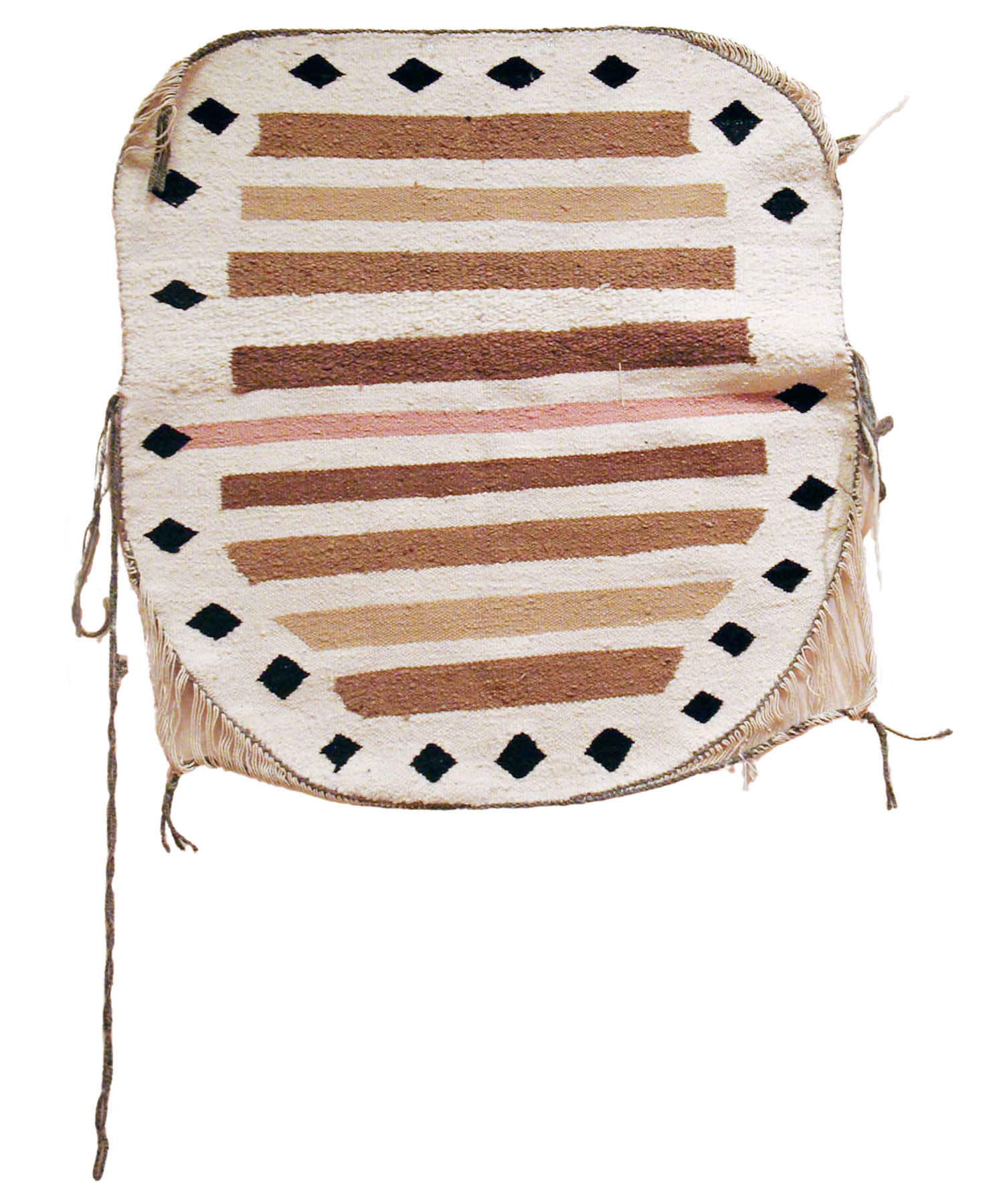
The Center cares for an extensive collection of textiles, including the nationally renowned Durango Collection, which represents close to 1,000 years of weaving traditions in the Southwest. Western ethnographers, anthropologists, and art historians have constructed most of the academic framework for documenting and understanding Diné textiles, which are typically characterized by their designs, colors, and specific geometric elements that adhere to a regional typology classification system through a settler gaze. Until recently, the contributions of weavers and their creations have been less emphasized in textile scholarship, as traditional academic approaches have not always recognized Diné weavers themselves as significant sources of information.
“Diné creation narratives state that we learned our artform from Na’ashjé’ii Asdzáá (Spider Woman) and Na’ashjé’ii Hastíín (Spider Man),” says guest curator, Aragón. “Na’ashjé’ii Asdzáá and Na’ashjé’ii Hastíín instructed the Diné that if we continue to bring beauty into the world with our looms, our children would never be hungry, unprotected from the elements, or without a way forward in life. This exhibition celebrates four themes of weaving that inhabit the fringes of Diné textile studies and honors the technical and aesthetic achievements of our ancestors.”
The themes that will be explored in the exhibition include:
- Polymorphic Experimentation displays unique innovations introduced by Diné weavers that challenge conventions of textile shapes and form.
- Esoteric Equations highlights rare Diné weaving techniques that involve complex mathematical manipulations of the loom, known by only a select number of weavers.
- Pictorial Narration examines weavings with narratives that interact with broader socio-political movements, environmentalism, and material conditions of Diné weavers.
- Continuous Warp presents new works by Diné College students, highlighting the ongoing and evolving nature of Diné weaving as a vibrant cultural art form.