


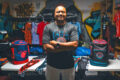

Designer hails from Shiprock, N.M.
A new Netflix film follows the Chuska Warriors, a high school basketball team from a town on the Navajo Nation in New Mexico. A Shiprock-based designer created the team’s basketball uniforms, which reclaim Native American imagery.
In recent years, high school and professional sports teams have faced pressure to remove Native American mascots due to their racist and offensive nature. These mascots, often caricatures or stereotypes, have long been criticized by Indigenous groups and their allies for perpetuating harmful misconceptions about Native cultures.
In a newly released movie on Netflix, an all-Indigenous high school basketball team on the Navajo Nation is reclaiming Native imagery on their jerseys.
Rez Ball follows the Chuska Warriors as they deal with issues that disproportionately affect Indigenous communities, including suicide and alcoholism.
The team is made up of all-Indigenous high school students, and its jerseys and practice uniforms feature traditional Indigenous warrior themes. The team’s sports apparel is displayed prominently throughout the film, which follows the players as they bond, persevere, and face rival non-Native teams.
Rez Ball is produced by the SpringHill Company, which is Lebron James’ film production venture. However, despite the basketball legend’s lifetime deal with Nike, the film’s wardrobe didn’t feature Nike-exclusive clothing. Instead, the players wore uniforms designed by Shiprock, N.M. resident Roddell Denetso.
Denetso runs Black Streak Apparel, a one-person business that designs Indigenous-themed sports apparel for youth teams all over Indian Country. He often designs teams’ jerseys based on their Tribal imagery.
He designed the Chuska Warriors’ home and away uniforms, a turquoise championship colorway, team bags, travel gear, the cheerleaders’ uniforms, and other apparel seen in the movie.
“I’m just this little Rez kid with a shop that I ran out of by my house from Shiprock,” Denetso said. Denetso said the stakes were high as the film crew needed his designs to be ready for filming various scenes.
“If we ever miss a deadline on something that hurts everything because it stops a whole day or two of production, like $50,000 lost,” Denetso said.
Denetso got to watch his jerseys in action on the set. As a resident of Shiprock, he got emotional watching the filming in and around the community.
“I was able to be on set when they shot at Shiprock High. My ‘coming to reality’ moment was when they were unloading stuff to go on set, and they had a cart (that) said Black Streak Apparel,” Denetso said.
Denetso played basketball throughout his youth, attending state and national championships. He said he identified with the Warriors team members dealing with their alcoholic family members.
“That’s how I grew up. I come from having an alcoholic mom and alcoholic stepfather, not having my father in my life, and having basketball as my outlet. Ninety-nine percent of my games all through high school, my mom and stepdad showed up intoxicated or hungover,” Denetso said.
Denetso is proud of his hard work and shares a message for those struggling with trauma.
“Hey, if I can do it, you can do it,” Denetso said, “It’s just all about how you use the generational trauma that we deal with. You can use it as a crutch, or you can use it as motivation to do better and to change the cycle.”
He hopes to inspire young people to show pride in their culture. He also hopes to reach more customers for his garments now that his work is reaching a wide audience.
This story is part of Voices From the Edge of the Colorado Plateau, a reporting
collaboration between KSUT Public Radio and KSJD Community Radio. It seeks to cover underrepresented communities in the Four Corners. The multi-year project covers Native, Indigenous, Latino/Latina, and other communities across Southwest Colorado.